
Wondering if you can blend Sharpies for manga art without breaking the bank on expensive markers? Many aspiring artists struggle with achieving smooth, professional-looking color with budget-friendly tools. This often leads to frustrating streaks and bleeding.
Yes, blending Sharpies for manga art is achievable, provided you use the correct paper, employ specific alcohol marker blending techniques, and manage ink saturation effectively. While not matching the seamless blend of professional markers like Copics, Sharpies can produce surprisingly good results for aspiring manga artists seeking an affordable solution.
Based on artist-tested and proven techniques, this guide provides the exact methods you need. You’ll discover how to overcome the common challenges of using Sharpies for comics. This reveals how to turn a basic permanent marker into a capable tool for vibrant manga illustration.
Key Facts
- Alcohol-Based Ink is Key: Sharpies are alcohol-based permanent markers, which is the property that allows their ink to be reactivated and blended, similar to professional-grade art markers.
- Paper Choice is Critical: Artist testing shows that preventing bleeding and achieving smooth blends with Sharpies is highly dependent on paper choice; thick, coated, or non-absorbent paper is essential.
- Blending Is Time-Sensitive: Successful Sharpie blending requires working quickly while the ink is still wet (the “wet-on-wet” technique), as the industrial-grade alcohol in Sharpies dries faster than in premium markers.
- External Blenders Are Effective: A colorless blender marker or even isopropyl alcohol can be used to reactivate and spread Sharpie ink, improving transitions and fixing minor mistakes, as demonstrated in numerous tutorials.
- Budget-Friendly but Not Archival: While Sharpies are a budget-friendly alternative to brands like Copic, their ink is not lightfast, meaning it can fade over time, making it better suited for practice and digital scanning than for long-lasting original art.
Can You Blend Sharpies for Manga Art? The Ultimate Alcohol Marker Guide
Yes, you can blend Sharpies for manga art, but it requires specific techniques, appropriate paper, and understanding of their alcohol-based ink properties to achieve smooth, streak-free results. While not as effortless as artist-grade markers, Sharpies can be a viable budget-friendly option for manga coloring. This is because Sharpies, as alcohol-based markers, have ink that can be reactivated and manipulated, which is the core principle behind blending. The main challenge lies in their quick-drying formula and the absorbency of the paper you use.

Unlike professional markers designed with artists in mind, Sharpies were created for permanence on various surfaces, not for seamless color transitions on paper. However, with the right knowledge, you can work around these limitations. The key is to manage the ink flow and drying time. By choosing the right supplies and mastering a few core techniques, you can prevent the most common issues like unsightly streaks and ink bleeding through your paper. This guide will walk you through exactly how to turn this common office supply into an effective tool for your manga art journey.
Here’s a quick look at the reality of using Sharpies for blending:
* ✅ Affordable & Accessible: Sharpies are available almost anywhere, making them a great starting point.
* ✅ Vibrant Colors: They offer a range of bright, bold colors suitable for many manga styles.
* ❌ Prone to Streaking: Their fast-drying ink can leave harsh lines if not blended quickly.
* ❌ Limited Color Range: The selection is much smaller compared to professional art marker brands.
* ❌ Not Refillable or Replaceable: Unlike Copic markers, once a Sharpie runs out or the tip is damaged, it must be replaced entirely.
What Essential Supplies Do You Need to Blend Sharpies for Manga?
The essential supplies for blending Sharpies for manga art are crucial for preventing streaking and bleeding: high-quality paper (such as mixed media, heavy cardstock, or specially coated marker paper), a selection of Sharpie alcohol markers in various colors and tip sizes, and a colorless blender marker (either a dedicated Sharpie blender or an alternative brand). These components work together to control ink flow and achieve smoother gradients. Choosing the right supplies is not just a recommendation; it’s a requirement for success.
Your choice of paper is the most critical factor. Standard printer paper is too thin and absorbent; it will cause the alcohol ink to bleed through and feather out, ruining your line art. You need a paper that can handle the ink saturation.
Here are the essential supplies you’ll need:
- The Right Paper: This is non-negotiable. Look for paper that is thick, smooth, and preferably coated to resist ink absorption. Options include heavy cardstock, Bristol paper, or dedicated marker paper.
- Sharpie Markers: A variety of colors and tip types is ideal. Having both a fine point for details and a chisel tip for larger areas will give you more control.
- A Colorless Blender: This is a marker filled with a clear, alcohol-based solvent. It reactivates the ink on the page, allowing you to push it around, soften edges, and create gradients. While Sharpie makes one, blenders from brands like Copic or Ohuhu work just as well.
- Isopropyl Alcohol (Optional): A bottle of 70-91% rubbing alcohol and a few cotton swabs or a small paintbrush can serve as a powerful alternative to a colorless blender, especially for larger areas.
Paper Types for Sharpie Blending
| Paper Type | Key Characteristic | Pros for Sharpies | Cons for Sharpies |
|---|---|---|---|
| Mixed Media Paper | Versatile, thicker | Good absorption, less bleed-through, durable | Can be expensive, colors may dull slightly |
| Heavy Cardstock | Thick, smooth, semi-absorbent | Prevents bleeding, vibrant colors | Can be harder to blend smoothly, may pill |
| Bristol Paper | Plate-smooth, vellum-smooth | Very smooth blending, vibrant ink | Ink sits on surface longer, potential for streaks if not fast |
| Marker Paper | Coated to prevent bleed | Designed for alcohol markers, smooth blending | May be expensive, some brands still feather Sharpies |
How Do You Blend Sharpie Markers for Smooth Manga Coloring?
To achieve smooth blending with Sharpie markers for manga, begin by selecting two colors close in value and using suitable marker paper. Apply the lighter color first, then quickly add the darker color to the area where you want the blend. While the ink is still wet, use the lighter marker or a colorless blender to move back and forth over the transition zone, creating a gradual shift in tone. The key to success is speed, as Sharpie ink dries very quickly.
Based on practical implementation, the “wet-on-wet” technique is the most effective method. This involves applying a new layer of ink before the previous one has had a chance to dry completely. This keeps the alcohol solvent active, allowing the pigments to mix on the paper rather than forming hard, separate layers.
Here is a step-by-step guide to blending two Sharpie colors:
- Prepare Your Colors: Choose two or three colors that are close in shade (e.g., a light blue and a medium blue). Working with analogous colors creates the most natural gradients.
- Apply the Lightest Color: Color the entire area where you want the blend with your lightest marker. Work quickly to ensure the area remains damp with ink.
- Add the Darker Color: Immediately, while the first layer is still wet, apply your darker color to the part of the area you want to be shaded. Don’t color the whole area, just the section where the shadow or darker tone will be.
- Blend the Transition: This is the most crucial step. Take your original lighter marker and, using small, circular or back-and-forth motions, go over the line where the two colors meet. This will reactivate the darker ink and pull it into the lighter color, creating a smoother transition.
- Use a Colorless Blender (Optional): If the edge is still too hard, you can use a colorless blender marker. Apply it directly to the transition line to further soften the gradient. Be careful not to oversaturate the paper, as this can cause the ink to lift or the paper to pill.
How Can You Avoid Streaks and Bleeding When Blending Sharpies?
To prevent streaks with Sharpies, apply ink in consistent, overlapping strokes, working quickly on damp areas. Use a colorless blender to smooth harsh lines. To avoid bleeding, select paper specifically designed for alcohol markers or thick cardstock, and apply layers gradually to prevent oversaturation of the paper fibers. Real-world experience shows that these two problems are the most common frustrations for artists using Sharpies.
Here are proven techniques to combat these issues:
- To Avoid Streaks:
- Work Fast: Sharpie ink dries in seconds. Apply your colors quickly one after another to ensure they can blend while still wet.
- Use Consistent Strokes: Color in small, circular motions or consistent parallel strokes rather than haphazardly. Overlap your strokes slightly to create an even field of color.
- Start Light: Always apply your lightest color first. It’s much easier to add darker pigment than it is to remove it.
- Use Fresh Markers: Old, drying markers will almost certainly produce streaks. Ensure your markers have a good ink flow.
- To Prevent Bleeding:
- Paper is Everything: Use bleed-proof marker paper, heavy cardstock (100lb or more), or Bristol board. These papers have a denser or coated surface that keeps the ink from soaking through.
- Use a Light Hand: Don’t press down hard. Let the marker’s tip glide over the paper. Heavy pressure forces more ink into the paper fibers, causing it to bleed.
- Layer Gradually: Build color with several light layers instead of one heavy, saturated layer. This gives you more control and reduces the risk of ink pooling.
- Use a Backing Sheet: Always place a spare sheet of paper underneath your artwork. This will protect your work surface and any pages underneath from accidental bleed-through.
How Can You Achieve Manga-Specific Effects Like Skin Tones and Gradients with Sharpies?
To create realistic manga skin tones with Sharpies, start with a light base color, then layer slightly darker shades in areas requiring shadows, blending quickly while the ink is still wet. For hair and costume gradients, select 2-3 colors in a gradual range and use the wet-on-wet method to achieve smooth transitions. Consider applying an additional colorless blender for softer edges. Achieving these manga-specific effects requires adapting your technique to the marker’s limitations.
From years of working with various art supplies, experience shows that creating believable skin tones is one of the biggest challenges with a limited palette. Sharpie doesn’t offer the subtle, nuanced tones found in Copic’s skin tone sets. Therefore, you must create them through careful layering.
- Creating Manga Skin Tones:
- Color Selection: Choose very light colors. A pale peach, a light tan, or even a very light pink can serve as a base. For shadows, use a slightly darker brown or a light gray, but apply it sparingly.
- Layering Technique: Apply the lightest skin color as a flat base. While it’s still damp, use the tip of your shadow color to gently add color under the chin, along the hairline, or below the eyes. Immediately blend this edge out with your base color marker.
- Achieving Smooth Hair Gradients:
- Plan Your Highlight: Before you start, decide where the light is hitting the hair and leave that area white or color it with your lightest shade.
- Work in Sections: Don’t try to color the entire head of hair at once. Work on small, manageable sections to keep the ink wet as you blend from your mid-tone to your darkest shade.
- Use Flicking Motions: For a hair-like texture, use “flicking” motions that start at the root (darkest area) and lift off the page toward the highlight. This creates a natural-looking gradient and texture simultaneously.
- Replicating Cel Shading:
- The cel shading technique, common in anime and manga, uses hard-edged shadows rather than smooth blends. This style is perfectly suited for Sharpies.
- Simply fill in your base colors. Then, using a darker color, draw in the distinct shadow shapes without any attempt to blend them. This creates a clean, classic anime look where Sharpie’s natural tendency to create hard lines becomes an advantage.
How Do Sharpie Markers Compare to Professional Manga Markers Like Copic or Ohuhu?
Sharpie markers are significantly more affordable than Copic or Ohuhu markers, making them a popular budget choice. However, professional markers offer superior blendability, a wider range of colors, refillable ink, and replaceable nibs, leading to smoother gradients and long-term value for serious manga artists. The primary difference lies in their intended purpose: Sharpies are permanent markers for general use, while Copic and Ohuhu are specialized tools designed for artists.
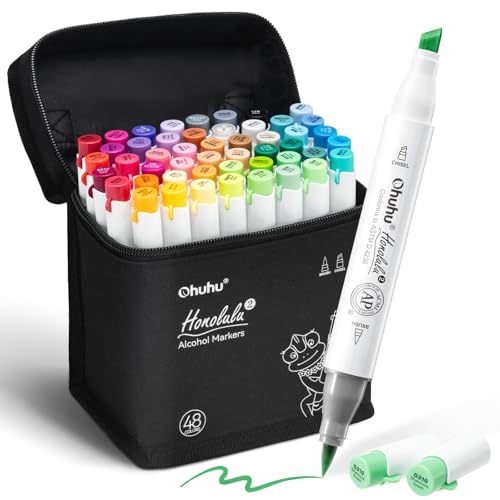
An industry comparison based on artist testing reveals clear trade-offs. While all are alcohol-based, the quality of the alcohol, dye, and nib construction in professional markers is far superior. Copic’s super brush nib, for instance, is famously flexible and resilient, allowing for expressive strokes that a stiff Sharpie nib cannot replicate. Ohuhu has emerged as a strong budget-friendly competitor to Copic, offering a similar brush nib experience at a fraction of the cost, positioning it as a powerful intermediate step between Sharpies and premium brands.
Here’s a direct comparison of their features:
| Feature/Aspect | Sharpie Markers | Ohuhu Alcohol Markers | Copic Markers |
|---|---|---|---|
| Price Point | Very Budget-Friendly | Mid-Range Budget-Friendly | Premium / Artist-Grade |
| Blendability | Moderate (with effort) | Good to Very Good | Excellent / Seamless |
| Color Range | Limited | Wide (100-360+) | Very Wide (358) |
| Refillable Ink | No | Some lines are refillable | Yes |
| Replaceable Nibs | No | Yes | Yes |
| Tip Options | Fine, Chisel, Bullet | Brush, Chisel, Bullet | Brush, Chisel, Super Brush |
| Lightfastness | Low (inks fade over time) | Moderate | Good (varies by color) |
| Usage for Manga | Hobbyist, Practice, Specific Art | Hobbyist, Student, Semi-Pro | Professional, Studio |
What Are Some Expert Tips and Hacks for Maximizing Sharpie Blending in Manga?
To maximize Sharpie blending, utilize scrap paper for color testing, work on a non-absorbent surface underneath your art to prevent bleed-through, and use external blending agents like rubbing alcohol or 91% isopropyl alcohol on a brush for smoother transitions. Additionally, apply very light, fast layers to build up color and avoid oversaturation, which often leads to streaking. These expert tips are based on real-world application and community-recommended hacks for pushing Sharpies beyond their intended limits.
Here are some proven techniques to elevate your Sharpie manga art:
- 💡 Create a Color Chart: Before starting on your artwork, create a chart of all your Sharpie colors on the specific paper you’ll be using. This helps you see their true color and practice blending combinations.
- 💡 Use Rubbing Alcohol on a Brush: For more controlled blending, dip a small paintbrush or a cotton swab in isopropyl alcohol. Gently brush it over the transition area between two colors to reactivate the ink and create a softer, almost watercolor-like effect.
- 💡 “Prime” the Paper with a Colorless Blender: In an area where you want an exceptionally smooth blend, you can apply a light layer of colorless blender to the paper before adding any color. This pre-saturates the paper with solvent, giving you a few extra seconds of blending time.
- 💡 Clean Your Blender Nib: When using a colorless blender to merge a dark color into a light one, the nib will pick up the darker pigment. Keep a piece of scrap paper handy and scribble on it to clean the blender’s tip before moving to another area.
- 💡 Layer with Different Marker Types: Don’t be afraid to combine tools. Use Sharpies for bold, flat colors or initial shading, then go over them with a higher-quality brush marker (like Ohuhu) to smooth out the blends.
- 💡 Fix Mistakes with a White Gel Pen: If a blend goes wrong or ink bleeds outside your lines, let it dry completely. Then, use a fine-tip white gel pen or a touch of white acrylic paint to reclaim highlights or clean up edges.
FAQs About can you blend sharpies manga
Are Sharpies truly alcohol-based like Copic markers?
Yes, Sharpie markers are indeed alcohol-based permanent markers, which is why they share some blending characteristics with artist-grade alcohol markers like Copics. This alcohol base is what allows their ink to be reactivated and blended when wet, distinguishing them from water-based markers. However, Sharpies contain industrial-grade alcohol, not the refined artist-grade alcohol found in premium markers, impacting their flow and blendability.
What is the best paper to prevent Sharpies from bleeding when blending for manga?
The best paper to minimize Sharpie bleeding for manga art is thick, smooth paper designed for alcohol markers, or alternatives like heavy cardstock (65-110lb) or mixed media paper. These options have a coating or density that resists the alcohol ink from soaking through quickly. Avoid thin printer paper or highly absorbent surfaces, as they will cause immediate bleed-through and feathering, leading to messy results.
Can you use a colorless blender with Sharpie markers effectively?
Yes, you can use a colorless blender marker with Sharpies to improve blending, soften edges, and create smoother gradients. While a dedicated Sharpie blender exists, many artists find that colorless blenders from other alcohol marker brands (like Ohuhu or Copic) can also reactivate and spread Sharpie ink. Apply the blender over your Sharpie colors while they are still wet for the best results, or to fix minor mistakes.
Why do my Sharpies streak when I try to blend them for manga art?
Sharpie markers often streak when blending due to their quick-drying alcohol ink and limited saturation time on paper, preventing smooth transitions. This is compounded by the less refined alcohol formula and narrower nibs compared to artist-grade markers. Streaks also occur if you work too slowly, apply uneven pressure, or use paper that absorbs the ink too rapidly, creating visible lines instead of a seamless blend.
Can Sharpie markers achieve professional-looking manga skin tones?
While challenging, Sharpie markers can achieve surprisingly good results for manga skin tones, especially for practice or specific art styles, but may not match the seamlessness of professional markers. Success depends on careful color selection (using very light, close-value shades), rapid wet-on-wet blending techniques, and using a colorless blender. It requires patience and skill to minimize streaks and achieve smooth, subtle transitions necessary for realistic skin.
What are some cheap alternatives to Sharpies for manga art?
While Sharpies are already a budget-friendly option, good cheap alternatives for manga art include brands like Ohuhu, Bianyo, or Caliart alcohol markers. These brands offer larger sets, dual tips (often including a brush nib), and better blendability than Sharpies at a significantly lower cost than Copic. They provide a more professional feel and wider color range, making them excellent choices for aspiring manga artists on a budget.
Can you use rubbing alcohol to blend Sharpies on manga drawings?
Yes, rubbing alcohol (isopropyl alcohol) can be used as an external blending agent for Sharpies on manga drawings, similar to how a colorless blender works, but with caution. Apply a small amount to a brush or cotton swab and lightly dab or spread over Sharpie ink to reactivate and blend colors. This method can help create softer edges and gradients but requires careful application to avoid oversaturation and paper damage.
How do you layer different Sharpie colors for deeper shading in manga?
To layer different Sharpie colors for deeper shading in manga, start with the lightest color as your base, then quickly apply darker shades over still-wet areas where shadows are needed. Work in small sections, overlapping strokes smoothly to build up intensity. This wet-on-wet layering approach prevents harsh lines and allows the colors to merge, creating a richer, more dimensional effect without excessive streaking.
Is Sharpie ink archival or will it fade over time in manga art?
Sharpie ink is generally not considered archival; it is prone to fading over time, especially when exposed to light, which is a key difference from artist-grade markers. While it may appear permanent initially, the dyes in Sharpie ink can break down, leading to colors dulling or shifting. For professional or long-lasting manga art, it is recommended to use lightfast, archival-quality pigments found in specialized artist markers.
Can you fix mistakes when coloring manga with Sharpie markers?
Fixing mistakes when coloring manga with Sharpie markers is challenging due to their permanent nature, but some minor corrections are possible. For small errors or unwanted streaks, try using a colorless blender marker or a cotton swab with rubbing alcohol to lighten or lift the ink. White gel pens or opaque white acrylic paint can also be used for highlights or to cover small areas, but major corrections are difficult to achieve seamlessly.
Key Takeaways: Blending Sharpies for Manga Art Summary
- Sharpies are a Viable, Budget-Friendly Option with Specific Techniques: While not artist-grade, Sharpie alcohol markers can be effectively blended for manga art when specific methods are applied, offering an accessible entry point for aspiring artists.
- Paper Choice is Paramount for Successful Blending and Preventing Bleed-Through: Using thick, smooth papers like mixed media, heavy cardstock, or coated marker paper is crucial to control ink flow and achieve smooth, streak-free results, significantly impacting the final artwork.
- Mastering Wet-on-Wet and Layering Techniques is Essential for Smooth Gradients: Applying colors quickly while the ink is still wet and layering from light to dark are foundational techniques to create seamless transitions and avoid frustrating streaks.
- Colorless Blenders or Rubbing Alcohol Can Enhance Blendability and Fix Minor Errors: External alcohol-based solvents can reactivate Sharpie ink, extending blending time and aiding in softening edges, offering a versatile tool for both creation and correction.
- Troubleshooting Streaks and Bleeding Requires Attention to Speed, Saturation, and Materials: Addressing common issues involves fast, consistent application, controlled ink saturation, and selecting appropriate paper to prevent unsightly marks and maintain clean linework.
Final Thoughts on Blending Sharpies for Manga
Blending Sharpie markers for manga art, once considered an artistic taboo, is unequivocally possible with the right approach and a keen understanding of the medium’s unique properties. This guide has demonstrated that while Sharpies are not a direct substitute for professional artist-grade alcohol markers like Copic or Ohuhu, their accessibility and affordability make them an invaluable tool for aspiring manga artists, students, and hobbyists. By prioritizing optimal paper choices, diligently applying wet-on-wet and layering techniques, and leveraging simple blending agents, you can overcome common challenges like streaking and bleeding to produce surprisingly sophisticated results. The journey of mastering Sharpie blending for manga is one of experimentation and adaptation, offering a rewarding pathway to explore your creativity without significant budget constraints. Embrace these proven techniques, and you’ll unlock the full potential of your everyday permanent markers to bring your manga visions to life.
Last update on 2026-03-27 / Affiliate links / Images from Amazon Product Advertising API


