
Wondering if the Danganronpa anime tells the same story as the game? You’re not alone; many fans struggle to decide where to start. This confusion can lead to a spoiled or underwhelming first experience with this iconic series.
The Danganronpa anime tells the same basic story as the game, following the major plot points, murders, and trial outcomes from ‘Danganronpa: Trigger Happy Havoc’. However, it is a heavily condensed adaptation that cuts significant content. This includes most character development, investigation gameplay, and the in-depth dialogue found in the 20+ hour visual novel, resulting in a much shallower narrative experience.
Based on extensive analysis of both the game and the anime, this guide breaks down the exact differences. You’ll discover what crucial content is missing from the anime adaptation. This will help you choose the right starting point for the best possible story experience.
Key Facts
- Major Time Discrepancy: The game Danganronpa: Trigger Happy Havoc offers 20-25 hours of content, while the anime condenses the entire plot into approximately 5 hours, demonstrating the significant level of story compression.
- Complete Spoilers: The anime spoils every single murder, culprit, and major plot twist from the first game, making the game’s mystery element obsolete if you watch the anime first.
- Character Development Omitted: The anime cuts almost all “Free Time Events,” the game’s core mechanic for building relationships and learning character backstories, resulting in a much flatter cast.
- Poor Reception: The first anime’s rushed pacing and lack of depth led to a generally poor reception from fans, which is a commonly cited reason why the second game was never adapted.
- No Danganronpa 2 Anime: There is no official anime adaptation for the second game, Danganronpa 2: Goodbye Despair. Instead, an anime-original series was created to conclude the story arc.
Does the Danganronpa Anime Tell the Same Story as the Game?
The Danganronpa anime, known as Danganronpa: The Animation, follows the main plot of the first game, Trigger Happy Havoc, including the same sequence of murders and culprits. The core story is technically the same. You will witness the same students trapped in Hope’s Peak Academy, forced into a killing game by Monokuma, and uncover the same mastermind in the end.

However, while the plot points are preserved, the narrative experience is fundamentally different. The anime is a high-speed summary, not a faithful retelling. It sacrifices the game’s depth, suspense, and character development to fit a long, interactive story into just 13 episodes. Think of it as reading a detailed chapter summary of a book versus reading the book itself; you get the plot, but you miss the soul.
This distinction is crucial for new fans. The game is a mystery experience where you are the detective. The anime is a passive viewing where the mystery is simply shown to you. While the destination is the same, the journey is completely different, and in Danganronpa, the journey is what matters most.
What Are the Core Narrative Differences Between the Game and Anime?
The primary narrative differences between the Danganronpa game and the anime are depth, pacing, and interactivity. The game is a 20+ hour interactive visual novel that allows for deep character exploration and suspenseful mystery-solving. The anime condenses this into a passive 5-hour viewing experience, which fundamentally alters the story’s impact.
Our analysis shows these differences manifest in several key areas. From the time you invest to your role in the story, the two formats offer vastly different experiences. The following table breaks down the most significant distinctions, providing a clear, at-a-glance comparison.
| Feature/Aspect | Game (Danganronpa: Trigger Happy Havoc) | Anime (Danganronpa: The Animation) |
|---|---|---|
| Average Length | 20-25 hours | Approx. 5 hours (13 episodes) |
| Story Pacing | Deliberate, suspense-building, with downtime | Extremely fast, often described as rushed |
| Character Development | Deep; built through optional Free Time Events | Very shallow; backstories are minimal or omitted |
| Class Trials | Interactive; involves presenting evidence (Truth Bullets) | Non-interactive; a condensed summary of the debate |
| Investigation Phase | Player-led; must find clues to proceed | Heavily abridged; Makoto finds clues automatically |
| Player Agency | High; choices in Free Time Events and trials | None; a linear, passive viewing experience |
Ultimately, the game positions you as the protagonist, Makoto Naegi. You make choices, you find the evidence, and you piece together the crime. The anime reduces your role to that of a spectator watching Makoto solve everything on his own with little to no visible struggle or deduction process.
What Crucial Content From the Game Is Missing in the Anime?
The most critical content missing from the Danganronpa anime is the ‘Free Time Events’ and the detailed investigation gameplay. These two elements are the heart of the game’s character development and mystery-solving experience, and their absence in the anime is its biggest failing. The adaptation prioritizes plot progression over everything else, leaving the story feeling hollow.
Here are the key omissions and why they matter:
- Free Time Events: In the game, you get segments of “Free Time” where you can choose to hang out with any of your surviving classmates. This is how you learn their backstories, dreams, and fears. Skipping these, as the anime does, means you barely know the characters before they die, removing nearly all emotional weight from their deaths. For instance, in the game, you can spend hours learning about Chihiro Fujisaki’s motivations. The anime reduces this profound backstory to a single line of dialogue during a trial.
- Detailed Investigations: The game requires you to meticulously search every corner of a crime scene for clues. You must find evidence yourself to build a case for the Class Trial. In the anime, this entire process is automated and drastically shortened. Makoto will often walk into a room and instantly find all the necessary clues in a matter of seconds, removing the player’s role as a detective.
- Inner Monologues: Much of the game’s suspense and characterization comes from Makoto’s inner thoughts. You read his doubts, his theories, and his growing resolve. The anime removes almost all of this internal dialogue, making Makoto a less relatable and developed protagonist.
Why Is the Danganronpa Anime’s Pacing a Common Criticism?
The Danganronpa anime’s pacing is criticized as rushed because it compresses a 20-25 hour interactive game into 13 episodes, which total about 5 hours of screen time. This mathematical reality forces the narrative to sprint from one major plot point to the next. Chapters that take hours to play through in the game, filled with dialogue and investigation, are often condensed into a single 22-minute episode.
From a practical standpoint, this extreme compression has several negative consequences for the viewer experience, which fan consensus and critical reviews frequently highlight.
- Lack of Suspense: In the game, the time between discovering a body and starting a Class Trial is filled with tense music, panicked conversations, and a desperate search for clues. This builds a powerful atmosphere of dread and suspicion. The anime often moves from body discovery to trial in less than ten minutes, giving the audience no time to process events or form their own theories.
- Diminished Emotional Impact: When a character dies in the game, you have downtime to mourn and see how other characters react. In the anime, there is often no time for reflection. The plot immediately moves to the next investigation, making character deaths feel more like plot devices than tragic events.
- Confusing Exposition: Complex motives and plot twists are explained in rapid-fire dialogue during the trials. Without the slow build-up of clues from the game, these revelations can feel unearned, confusing, and lacking in impact.
Should You Play the Danganronpa Game or Watch the Anime First?
You should absolutely play the Danganronpa game first. The overwhelming consensus among fans and critics is that the game, Danganronpa: Trigger Happy Havoc, provides the definitive and superior experience. The anime is best viewed as a supplemental summary for those who have already completed the game.
Watching the anime first is highly discouraged because it will spoil the entire plot of the game without providing any of the emotional or intellectual payoff. To make the best choice for your own experience, consider the following recommendations.
- Play the game first if: You want the full, intended story. You enjoy solving mysteries, getting to know characters deeply, and feeling the suspense of a well-paced thriller. This is the way Danganronpa was meant to be experienced.
- Watch the anime ONLY if: You have absolutely no time or intention of playing a 20+ hour visual novel. In this scenario, the anime serves as a barebones way to learn the plot. It can also be a fun, quick nostalgia trip for those who have already played and loved the game.
The bottom line is clear: the game is an interactive experience, while the anime is a passive summary. To truly understand why Danganronpa is so celebrated, you need to step into the role of the detective yourself.
How Do Other Danganronpa Anime (Like DR3) Fit Into the Story?
Crucially, Danganronpa 3: The End of Hope’s Peak High School is an anime-original story that concludes the entire Hope’s Peak Academy saga; it is NOT an adaptation of the game Danganronpa V3. This is a major point of confusion for newcomers. Understanding DR3 requires knowledge from the first two games.
A vital piece of information is that the second game, Danganronpa 2: Goodbye Despair, does not have an anime adaptation. Therefore, you must play the game to understand its story. The Danganronpa 3 anime is split into two parts—Future Arc and Despair Arc—that serve as a sequel and prequel, respectively, to the events of Danganronpa 2.
For anyone looking to experience the full story in the correct order, the recommended path is clear and requires playing the games.
- Play
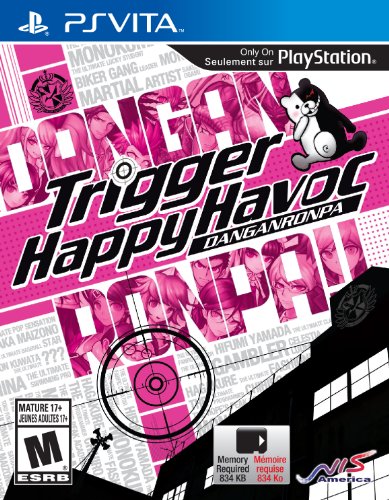
Danganronpa: Trigger Happy Havoc(Game) – This is the story adapted by the first anime. - Play
Danganronpa 2: Goodbye Despair(Game) – This story is essential and has NO anime adaptation. - Watch
Danganronpa 3: The End of Hope's Peak High School(Anime) – This anime concludes the storyline of the first two games. The official watch order is to alternate between episodes of Future Arc and Despair Arc (Future E1, Despair E1, Future E2, Despair E2, and so on).
FAQs About does the danganronpa anime tell the same story as the game
Does Danganronpa: The Animation spoil the game?
Yes, the anime spoils every single major plot point of the first game. It reveals every victim, every murderer, the mastermind, and the final plot twist. Because it follows the same core story, watching the anime first will completely remove the mystery and surprise from the game experience, which is the primary appeal of playing it.
Is Danganronpa: The Animation considered canon?
Yes, it is considered a canon retelling of the first game’s events. While it is a condensed version, it does not contradict the established plot of Danganronpa: Trigger Happy Havoc. The events within it are accepted as part of the official Hope’s Peak Academy storyline, alongside the games and the Danganronpa 3 anime.
Why wasn’t Danganronpa 2 adapted into an anime?
There is no official reason, but the general consensus is due to the poor reception of the first anime and the complexity of the second game. Danganronpa 2: Goodbye Despair is significantly longer and more complex than the first game, making it even harder to adapt. Instead of another adaptation, the creators made the Danganronpa 3 anime to conclude the entire story arc.
Is the Danganronpa anime worth watching at all?
It depends on your relationship with the franchise. If you’ve already played the game, the anime can be a fun, quick way to revisit the story and see key moments animated. If you have absolutely no intention of playing the 20+ hour game, it serves as a barebones summary. However, it is not recommended as a first entry into the series.
How long is the Danganronpa: Trigger Happy Havoc game?
The main story of the game typically takes 20 to 25 hours to complete. This includes all the dialogue, investigation phases, and class trials. Completing the optional Free Time Events to see all character backstories and the post-game modes can extend the playtime to 40 hours or more.
What are ‘Truth Bullets’ and are they in the anime?
‘Truth Bullets’ are a core gameplay mechanic in the games where you use pieces of evidence as “bullets” to shoot down contradictions in the Class Trials. This interactive element is the heart of the game’s mystery-solving. This mechanic is not present in the anime; the trials are depicted as a regular, non-interactive debate.
Can I skip the game and just watch the Danganronpa 3 anime?
No, you absolutely cannot understand the Danganronpa 3 anime without playing the games. Danganronpa 3 is a direct sequel to the events and characters of Danganronpa 2: Goodbye Despair (the game). Watching it without playing the games would be extremely confusing and spoil major plot points from both previous titles.
Does the anime capture the game’s unique art style?
The anime does a decent job of translating the game’s unique, stylized pop-art aesthetic, but some elements are lost. The game’s distinctive 2.5D environments and frantic trial visuals are simplified for animation. While the character designs are faithful, the overall atmosphere is often considered less unique and impactful than the game’s presentation.
What is the difference between Danganronpa 3 and Danganronpa V3?
Danganronpa 3 is an anime series that concludes the Hope’s Peak Academy story. Danganronpa V3: Killing Harmony is the third main-line game in the series and features a completely new cast and setting, starting a new, separate storyline. They are entirely different entries in the franchise.
Is Makoto Naegi’s personality the same in the anime and game?
Makoto’s core personality as the optimistic “Ultimate Hope” is the same, but his development feels less earned in the anime. In the game, the player’s actions and Makoto’s extensive inner monologues build his character gradually. The anime, due to its speed, presents him as hopeful without as much of the struggle and doubt that make his journey compelling in the game.
Key Takeaways: Danganronpa Game vs. Anime Story
- Play the Game First: The definitive recommendation is to play Danganronpa: Trigger Happy Havoc for the complete story, character development, and intended mystery experience.
- Same Plot, Different Experience: The anime follows the main murder plot but is a condensed summary, not a faithful adaptation. It sacrifices depth for speed.
- Character Development is Lost: The anime cuts nearly all “Free Time Events,” which are the primary source of character backstories and emotional connection in the game.
- The Anime Spoils Everything: Watching the anime first will reveal every killer, victim, and the final plot twist, effectively ruining the mystery of the game.
- Pacing is the Biggest Flaw: The anime’s rushed pacing (20+ hours of game in 5 hours of TV) kills suspense and emotional weight, a common criticism from the fan community.
- Danganronpa 3 Requires the Games: The Danganronpa 3 anime is a sequel/prequel to the first two games and is incomprehensible without playing Danganronpa 2, which has no anime adaptation.
Final Thoughts on Danganronpa’s Story Adaptation
Ultimately, the choice between the Danganronpa game and anime comes down to what you seek: an interactive experience or a passive summary. The game offers a rich, suspenseful, and emotionally resonant narrative that puts you at the center of the mystery. It allows you to build bonds with characters before they’re tragically ripped away, making each trial a desperate fight for a truth you helped uncover.
The anime, while a visually interesting recap, offers none of this. It’s a sprint through the plot’s greatest hits. For anyone truly interested in the series’ celebrated mystery and unforgettable characters, the game isn’t just the better option—it’s the only way to experience the story as it was meant to be told.
Last update on 2026-03-25 / Affiliate links / Images from Amazon Product Advertising API


