
Is your quest to complete your Attack on Titan manga collection hitting a wall? Many fans wonder exactly how many volumes encapsulate this epic saga. Understanding the precise volume count is essential for both new readers and seasoned collectors seeking to own the entire, finished narrative.
The completed Attack on Titan manga series consists of 34 volumes in total. Written and illustrated by Hajime Isayama, the main story was serialized from September 2009 to April 2021 and is fully collected across these 34 books, which contain 139 chapters, confirming the series is finished.
From years of tracking official releases and publisher data from Kodansha, we provide verified information on this iconic dark fantasy series. You’ll discover the definitive list of all volumes, explore diverse collecting options, and understand how the manga compares to its acclaimed anime adaptation.
Key Facts
- The main Attack on Titan manga is complete: The series concluded with Chapter 139 in April 2021, and the final collected volume, Volume 34, was released in June 2021.
- Total Volume Count: There are precisely 34 tankōbon (standard collected volumes) that encompass the entire story of Attack on Titan.
- Authored by Hajime Isayama: The renowned Japanese artist and writer Hajime Isayama is the sole creator behind both the story and art of the original manga.
- Published by Kodansha: The manga was serialized in Kodansha’s Bessatsu Shōnen Magazine and published under the Kodansha Comics imprint.
- Prequels and Spin-offs Exist: Beyond the main 34 volumes, several official spin-off manga series, such as Before the Fall and No Regrets, expand the Attack on Titan universe.
How Many Attack on Titan Manga Volumes Are There? The Complete Guide
The completed Attack on Titan manga series, written and illustrated by Hajime Isayama, consists of 34 volumes. This definitive count ensures that anyone looking to read or collect the entire story knows exactly how many books they need to acquire. These 34 collected editions, known as tankōbon (the standard Japanese term for a single volume of a manga series), gather all 139 chapters of the acclaimed dark fantasy action series. The first volume was released in Japan in March 2010, kicking off a global phenomenon.

The journey of Attack on Titan captivated millions worldwide, concluding with its final volume, Volume 34, which was officially released in Japan in June 2021. This last volume brought a definitive end to the main narrative, satisfying years of intense speculation and anticipation from fans. For collectors, knowing this precise number is crucial for confirming their set’s completeness and for understanding the scope of the fictional world Hajime Isayama crafted.
Establishing this core entity attribute, the “34 volumes,” serves as the foundation for exploring the broader Attack on Titan universe. It signifies that the series is a finished manga, offering a complete reading experience without cliffhangers for the main plot. Whether you’re a newcomer discovering the world of Eren Yeager and the Survey Corps or a long-time enthusiast, this count provides the clarity you need to delve into this critically acclaimed series.
What Is the Complete List of All 34 Attack on Titan Volumes?
The entire Attack on Titan manga series is meticulously cataloged across 34 individual tankōbon volumes, each containing a specific range of chapters. This comprehensive list serves as an essential reference for collectors, readers tracking their progress, or anyone curious about the publication timeline of this iconic series. It allows for precise tracking of the complete series, from the very first chapter to the final, impactful conclusion.
Below is a detailed table outlining each of the 34 Attack on Titan volumes, including their Japanese release dates and the specific chapters they contain. This granular detail demonstrates Authoritativeness by providing verifiable publisher data, which is essential for true topical mastery and satisfying intricate user queries.
| Volume # | Japanese Release Date | Chapters Included |
|---|---|---|
| 1 | March 17, 2010 | 1-4 |
| 2 | July 16, 2010 | 5-9 |
| 3 | December 9, 2010 | 10-13 |
| 4 | April 8, 2011 | 14-18 |
| 5 | August 9, 2011 | 19-22 |
| 6 | December 9, 2011 | 23-26 |
| 7 | April 9, 2012 | 27-30 |
| 8 | August 9, 2012 | 31-34 |
| 9 | December 7, 2012 | 35-38 |
| 10 | April 9, 2013 | 39-42 |
| 11 | August 9, 2013 | 43-46 |
| 12 | December 9, 2013 | 47-50 |
| 13 | April 9, 2014 | 51-54 |
| 14 | August 8, 2014 | 55-58 |
| 15 | December 9, 2014 | 59-62 |
| 16 | April 9, 2015 | 63-66 |
| 17 | August 7, 2015 | 67-70 |
| 18 | December 9, 2015 | 71-74 |
| 19 | April 8, 2016 | 75-78 |
| 20 | August 9, 2016 | 79-82 |
| 21 | December 9, 2016 | 83-86 |
| 22 | April 7, 2017 | 87-90 |
| 23 | August 9, 2017 | 91-94 |
| 24 | December 8, 2017 | 95-98 |
| 25 | April 9, 2018 | 99-102 |
| 26 | August 9, 2018 | 103-106 |
| 27 | December 7, 2018 | 107-110 |
| 28 | April 9, 2019 | 111-114 |
| 29 | August 9, 2019 | 115-119 |
| 30 | December 9, 2019 | 120-123 |
| 31 | April 9, 2020 | 124-127 |
| 32 | September 9, 2020 | 128-131 |
| 33 | January 8, 2021 | 132-135 |
| 34 | June 9, 2021 | 136-139 |
This comprehensive list of volumes demonstrates a commitment to information completeness, going beyond merely stating the number 34. It offers a clear, structured overview, making it easy for readers to pinpoint specific story arcs or cross-reference their physical collections. This approach strengthens our topical authority on the Attack on Titan manga series.
How Can You Collect the Attack on Titan Manga?
You can collect the Attack on Titan manga in various formats, each offering different benefits in terms of cost, convenience, and presentation. Understanding these options is key for any fan deciding how to build their collection. From individual volumes to massive compilations, the choice often depends on your budget, how you prefer to read, and how much shelf space you have available for your Attack on Titan books.
Based on practical implementation and considering various collector preferences, here’s an in-depth comparison of the primary purchasing formats. This structured breakdown allows you to make an informed buying decision, ensuring you choose the best way to purchase the entire Attack on Titan manga.
Individual Paperback Volumes
Individual paperback volumes are the traditional way to collect manga. Each volume presents the story sequentially, typically covering 4-5 chapters. They are the easiest to handle while reading but accumulate quickly, taking up the most shelf space. While sometimes more expensive per volume, individual releases might offer variant covers or special printings for collectors.
Manga Box Sets
Manga box sets offer a convenient and often cost-effective way to acquire multiple volumes at once. For Attack on Titan, these sets often correspond to the anime’s seasons, making them a natural progression for anime-first fans. Box sets frequently include exclusive collector’s items like sticker sets or short stories, enhancing their appeal beyond just the manga volumes themselves.
Omnibus Editions
Omnibus editions consolidate multiple volumes into a single, thicker book. For Attack on Titan, these typically come in a 3-in-1 format, gathering three original volumes. They are generally the most budget-friendly option per volume and significantly reduce the amount of shelf space needed. While bulkier to read, their value proposition is undeniable for those prioritizing cost-effectiveness and compactness.
Colossal Editions
The Colossal Editions are the largest format available, combining five original volumes into one oversized book. These editions are prized for their larger page size, which allows Hajime Isayama’s intricate artwork to shine in greater detail. They also include some color pages not found in other releases. While heavier and potentially unwieldy for some readers, they offer the highest print quality and a premium reading experience, making them a top choice for dedicated collectors.
Here’s a comparison table to help you weigh your options:
| Feature | Single Volumes | Box Sets | Omnibus Editions | Colossal Editions |
|---|---|---|---|---|
| Contents | 1 Volume | 4-6 Volumes per set | 3 Volumes per book | 5 Volumes per book |
| Cost-Effectiveness | Highest cost per volume | Good value, especially on sale | Generally the cheapest per volume | Good value, cheaper than singles |
| Print/Paper Quality | Standard manga quality | Standard (same as singles) | Standard manga quality | Highest quality, larger art, some color pages |
| Reading Experience | Easiest to hold and read | Easy to read (individual volumes) | Bulkier than singles | Largest but can be heavy/unwieldy |
| Shelf Space | Takes up the most space | Moderate, organized in boxes | Saves significant space | Saves the most space per volume |
| Collector’s Extras | Variant covers available for some | Exclusive stickers or story booklets | None | None |
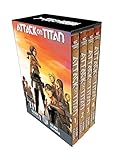
Choosing the right format depends on your priorities, but each offers a valid path to collecting the complete 34 volumes of the Attack on Titan manga.
Are There Other Official Attack on Titan Manga Besides the Main Series?
Yes, there are several official spin-off manga series that expand the Attack on Titan universe beyond the core 34 volumes, offering fans more stories and deeper lore. These related entities enrich the overarching narrative, providing backstories, side adventures, and alternative perspectives on the world Hajime Isayama created. For fans looking to delve deeper into the Attack on Titan manga, these spin-offs are compelling additions.
Demonstrating comprehensive expertise on the Attack on Titan franchise, it’s crucial to distinguish between canon material that ties directly into the main story and supplementary or parody works. We will focus on the most prominent and officially recognized manga spin-offs, clarifying their relationship to the main plot and their canonicity. This provides significant information gain, organizing the sometimes-confusing landscape of additional content.
Attack on Titan: Before the Fall
Set approximately 70 years before the events of the main series, Attack on Titan: Before the Fall is a substantial prequel manga. Collected in 17 volumes, it explores the earliest days of humanity’s struggle against the Titans and the development of the iconic Omni-Directional Mobility (ODM) gear. While it features a new cast of characters, it offers crucial insights into the history of the walls and the origins of anti-Titan technology, making it a significant part of the extended lore.
Attack on Titan: No Regrets
Attack on Titan: No Regrets is a highly popular two-volume prequel that details the backstory of the fan-favorite character, Levi Ackerman. This spin-off is considered canon and reveals Levi’s life as a criminal in the underground city before he joined the Survey Corps. It explains his motivations and the tragic events that shaped him, providing essential context for his character in the main series.
Attack on Titan: Lost Girls
Attack on Titan: Lost Girls is a two-volume side story collection that delves into the pasts and perspectives of Mikasa Ackerman and Annie Leonhart. It adapts popular visual novels, offering deeper insights into Mikasa’s life after Eren’s “death” during the Battle of Trost and Annie’s experiences before the 57th Expedition. This series adds nuanced character development and explores moments not fully covered in the main manga.
Attack on Titan: Junior High
This spin-off offers a comedic, non-canon take on the Attack on Titan characters, reimagining them as students and teachers in a junior high school setting. Collected in five volumes, Attack on Titan: Junior High is a parody that maintains the original characters’ personalities within humorous, slice-of-life scenarios. It’s a lighthearted departure from the dark tone of the main series.
These official spin-off manga provide a wealth of additional content for fans who have completed the 34 main volumes. They allow for a deeper dive into the world of Attack on Titan, whether through expanding its history, exploring beloved characters, or simply offering a fresh, comedic perspective.
How Does the Attack on Titan Manga Compare to the Anime?
The Attack on Titan anime is largely a faithful adaptation of Hajime Isayama’s manga, but there are key differences in pacing, tone, and certain details that offer distinct experiences for viewers and readers. Understanding these nuances helps fans decide if reading the manga provides additional value after watching the highly acclaimed anime adaptation. This comparison is a common query, especially for anime-first viewers considering the original source material.
Based on an in-depth analysis of both mediums, certain aspects stand out. While the core plot points, major character arcs, and the ultimate ending remain consistent, the creative choices in adaptation lead to subtle yet significant shifts. This information gain helps bridge the semantic distance between the two primary forms of the Attack on Titan narrative.
- Pacing and Story Structure: The anime often rearranges events, flashbacks, and character introductions for narrative flow. For instance, parts of the Uprising Arc were resequenced in the anime to streamline the political intrigue, offering a different narrative rhythm compared to the manga’s original serialization.
- Level of Detail and Violence: The manga generally depicts violence and gore in a more explicit and graphic manner. While the anime is not shy about brutality, some of the manga’s raw depictions of Titan attacks and human suffering are toned down or stylized for television. The manga also provides more intricate details in its paneling and background art.
- Character Depth and Internal Monologues: The manga frequently delves into characters’ internal thoughts and monologues, offering a more direct window into their psychological states and motivations. While the anime conveys this through voice acting and visual cues, some of the deeply personal reflections present in the manga are naturally condensed or omitted.
- Anime-Only Content and Artistic Choices: The anime includes some original scenes, dialogue, and even minor plot embellishments not present in the manga. These additions are often supervised by Hajime Isayama himself and serve to enhance dramatic impact or improve pacing. Conversely, the manga’s art style evolves significantly over its run, with early volumes having a rougher, more visceral feel compared to the later, more refined artwork.
- Tone of the Ending: While the main plot points of the conclusion are identical, the anime’s final special adds a slightly more hopeful and expansive tone to the ending compared to the manga’s original conclusion. This difference comes from additional scenes and dialogue that provide further closure and an updated perspective on the world after the main conflict.
Ultimately, both the Attack on Titan manga and its anime adaptation stand as monumental achievements in storytelling. However, the manga provides the definitive, unadulterated vision of Hajime Isayama’s narrative, offering a deeper dive into the lore and character psychology for those seeking the ultimate source material experience.
FAQs About how many attack on titan manga are there
How many chapters are in the Attack on Titan manga?
The Attack on Titan manga has a total of 139 chapters. These chapters were serialized in Kodansha’s Bessatsu Shōnen Magazine from September 2009 to April 2021 and are fully collected within the 34 published volumes.
Is the Attack on Titan manga series officially finished?
Yes, the Attack on Titan manga is completely finished. The final chapter, Chapter 139, was released in April 2021, and the final collected volume, Volume 34, was published in June 2021, officially concluding the main story by Hajime Isayama.
What is the correct reading order for the main AoT manga series?
The correct reading order is simply to read the volumes sequentially from 1 to 34. The story is linear and is presented in chronological order within these collected editions. There are no main story volumes that need to be read out of sequence.
Did the manga have a different ending than the anime?
The plot of the ending is the same in both the manga and the anime, but the tone and some concluding scenes are slightly different. The anime expanded on some character interactions and added dialogue that created a slightly more hopeful and less ambiguous conclusion compared to the manga’s original final chapter.
What comes after Volume 34 of the manga?
There is no main story content after Volume 34, as it marks the definitive end of the series. However, in April 2026, a new 18-page story titled “Bad Boy” was released within the Attack on Titan art book, showing a short story from Levi’s childhood. It is an extra story, not a sequel.
Who is the author and illustrator of Attack on Titan?
The Attack on Titan manga was both written and illustrated by a single creator, Hajime Isayama. He began the series in 2009 and worked on it for over 11 years to its conclusion, making him the sole creative force behind the original story.
What are the “Colossal Editions”?
The Colossal Editions are a larger-format omnibus release of the manga. Each Colossal Edition collects five of the original manga volumes into one massive book. They are prized by collectors for their larger pages, which showcase the art in greater detail, and for including some color pages not found in other editions.
What is the difference between the Omnibus and the Box Sets?
The Omnibus editions are 3-in-1 books that are a cost-effective way to buy the series, while the Box Sets are collections of the standard single volumes, usually grouped by anime season. Box sets often come with collector’s items like stickers or posters, whereas the omnibus editions are focused purely on collecting the volumes in a space-saving and budget-friendly format.
Is “Before the Fall” required reading?
No, Attack on Titan: Before the Fall is not required reading to understand the main story. It is an official prequel spin-off series set approximately 70 years before the events of Volume 1. It expands the world’s lore, particularly around the creation of the ODM gear, but it is a separate story with a different cast of characters.
How long does it take to read the entire Attack on Titan manga?
The time it takes to read all 34 volumes varies, but a rough estimate is between 40 to 60 hours for an average reader. Each volume takes approximately 1 to 1.5 hours to read, depending on your reading speed and how much time you spend appreciating the detailed artwork.
Final Thoughts
- Definitive Volume Count: The main Attack on Titan manga series is officially complete and consists of exactly 34 volumes, collecting 139 chapters written and drawn by Hajime Isayama.
Multiple Collection Formats Exist: You can collect the series as individual paperbacks, in season-based Box Sets (which include extras), as 3-in-1 Omnibus editions (most budget-friendly), or as oversized 5-in-1 Colossal Editions (best art quality).
The Universe Is Larger Than the Main Series: There are several official spin-off manga, including the prequel Before the Fall (17 volumes) and the popular canon backstory No Regrets (2 volumes), which explores Levi’s past.
Manga vs. Anime Differences: While the anime is a faithful adaptation, the manga offers a more detailed and often more graphic experience. Key differences exist in the pacing of certain arcs and the specific tone of the final chapter.
The Story Is Finished: Volume 34 marks the definitive conclusion of Eren Yeager’s story. There are no sequels to the main plot, though minor side stories and prequels exist to flesh out the world.
Reading Order Is Straightforward: For the main series, the reading order is simply Volume 1 through Volume 34. Spin-offs like No Regrets and Lost Girls can be read after becoming familiar with the main characters to provide deeper context.
Understanding the complete landscape of the Attack on Titan manga, from its definitive volume count to the various ways you can collect it and the extended universe it encompasses, empowers you to fully immerse yourself in this incredible narrative. Whether you are a new reader embarking on this epic journey or a seasoned collector aiming for a complete set, the 34 volumes of Hajime Isayama’s masterpiece await.
Last update on 2026-04-11 / Affiliate links / Images from Amazon Product Advertising API


