
Wondering how many Naruto manga books there are to collect? You’re not alone; many fans find the sheer volume of the series a bit daunting. It can be confusing to figure out the definitive total.
The original Naruto manga series is comprised of exactly 72 tankōbon volumes, which collect all 700 chapters of the story. This is the definitive count for the main series authored by Masashi Kishimoto, published in Japan by Shueisha and in English by Viz Media.
Based on official publisher data and hands-on collecting experience, this guide will provide the complete answer. You’ll discover the precise structure of the 72 volumes, the different formats available for purchase, and how the story continues after the final book.
Key Facts
- Definitive Volume Count: The complete original Naruto manga series consists of 72 individual volumes, as confirmed by its Japanese publisher Shueisha and its English publisher Viz Media.
- Total Chapter Count: These 72 volumes collect the entire 700-chapter story written and illustrated by the series’ creator, Masashi Kishimoto.
- Two-Part Structure: The narrative is divided into two distinct parts: Part I spans volumes 1-27, and Part II (corresponding to the Shippuden anime) covers volumes 28-72.
- Budget-Friendly Option: A 3-in-1 Omnibus edition condenses the 72 volumes into 24 larger books, offering a more affordable way to own the entire physical series.
- Sequel Series Exists: The story continues after volume 72 in a separate sequel manga titled Boruto: Naruto Next Generations, which has its own ongoing volume count.
How Many Naruto Manga Books Are There? Collector’s Guide
The official count for the original Naruto manga series is 72 books. These individual volumes, known in Japan as tankōbon, collect the entire 700-chapter story written and illustrated by Masashi Kishimoto. This is the core number any aspiring collector or reader needs to know. The series officially concluded its run in November 2014, so this number is final and will not change.

When you set out to collect the series, you are embarking on a journey through these 72 volumes. This count is consistently recognized by official publishers like Shueisha in Japan and Viz Media in North America, making it the authoritative answer. Any “complete” collection of the original story must contain all of these books.
It’s important to distinguish this 72-volume series from its sequels or spin-offs. The main saga of Naruto Uzumaki, from his beginnings as a young ninja-in-training to his ultimate destiny, is fully contained within these books. Understanding this foundational number is the first step to building your collection or starting your reading adventure.
How Is the Naruto Manga Series Structured into Parts?
The 72-volume Naruto manga is divided into two major parts: Part I and Part II. This division marks a significant time skip in the story and separates Naruto’s childhood adventures from his teenage journey. Understanding this structure is crucial, especially for fans of the anime who are familiar with the Naruto and Naruto: Shippuden branding.
The breakdown provides a clear roadmap for reading or collecting the series:
- Part I (Volumes 1-27): This section covers the first 244 chapters of the manga. It introduces a young Naruto Uzumaki, details his origins and struggles in the Hidden Leaf Village, the formation of Team 7 with Sasuke and Sakura, and culminates with the Chunin Exams and Sasuke’s departure. This part concludes with Naruto leaving the village to undergo a rigorous training period.
Part II (Volumes 28-72): This larger section covers the remaining chapters from 245 to 700. It corresponds directly to the anime series titled Naruto: Shippuden. The story picks up after a two-and-a-half-year time skip, featuring a more mature and powerful Naruto. He and his friends confront the formidable Akatsuki organization, uncover world-altering secrets, and ultimately face the Fourth Great Ninja War.
For fans coming from the anime, the distinction is simple: Part I is the story of the original Naruto anime, while Part II is the story told in Naruto: Shippuden. The manga, however, does not use the “Shippuden” title; it simply continues the chapter and volume numbering.
What Are the Different Formats for Collecting the Naruto Manga?
Beyond the simple count of 72 volumes, you have several formats to choose from when collecting the Naruto manga. Your decision will likely depend on your budget, available shelf space, and personal preference as a collector. The three primary editions you will encounter are the standard individual tankōbon volumes, the budget-friendly 3-in-1 Omnibus books, and the premium Sōshūhen collector’s editions.
Each format offers a different experience, from the classic feel of the original single issues to the space-saving convenience of the omnibus. To help you make an informed choice, here is a direct comparison of the key features of each edition.
| Feature/Aspect | Individual Tankōbon | 3-in-1 Omnibus Edition | Sōshūhen (Megavolume) |
|---|---|---|---|
| Total Volumes | 72 | 24 | 8 (Part I Only) |
| Story Coverage | Complete (Parts I & II) | Complete (Parts I & II) | Incomplete (Part I Only) |
| Average Cost | Higher (per series) | Lower (per series) | Highest (per volume) |
| Shelf Space | Most | Least | Moderate |
| Paper Quality | Standard | Thinner | Premium / Thicker |
| Collector’s Value | High (especially 1st prints) | Moderate | Very High |
| Bonus Content | Minimal | Minimal | Includes color pages |
What Are the Standard Tankōbon Volumes?
The standard format for the Naruto manga is the tankōbon [a Japanese term for a standard paperback book volume]. These are the 72 individual paperback volumes that were originally released in Japan by Shueisha and in English by Viz Media. A complete collection of the original story requires purchasing all 72 of these single books. Each volume features its own unique cover art by Masashi Kishimoto and typically contains between 7 and 11 chapters of the story. For many collectors, owning the 72 individual volumes is the most authentic way to experience the series, as it preserves the original release format and cover art progression. Think of it as the standard paperback version of the book you’d find in any bookstore.
What Is the Naruto 3-in-1 Omnibus Edition?
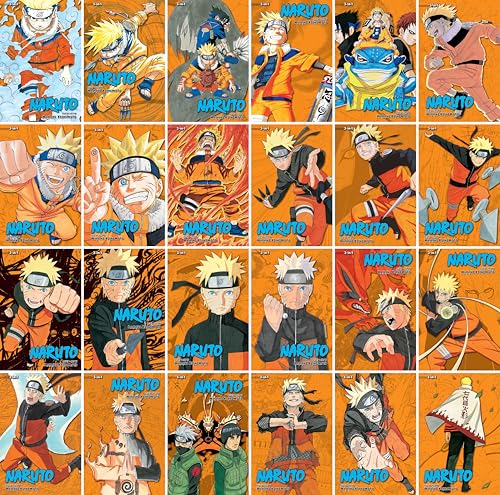
The Naruto 3-in-1 Omnibus edition collects the entire 72-volume series into 24 larger, thicker books. As the name implies, each omnibus volume contains three of the original tankōbon volumes. This format, also published by Viz Media, is the most cost-effective and space-saving way to own the complete physical manga. From our experience, while the omnibus is fantastic for saving money and shelf space, some collectors note that the paper is thinner than in the single volumes, which can occasionally lead to minor ink bleed-through.
Here are the main considerations for this edition:
* ✅ Pros: Significantly more affordable than buying 72 individual books and takes up much less shelf space.
* ❌ Cons: The books are bulkier and heavier, and the paper quality is generally considered a step down from the single volumes.
What Is the Sōshūhen (Uzumaki Megavolume) Edition?
The Sōshūhen [a premium, large-format re-release], also known as the ‘Uzumaki Megavolume’, is a high-quality collector’s edition of the manga. An often-overlooked strategy for premium collecting, these volumes are larger in size and feature premium, thicker paper. What most guides miss is that they also include the original color pages from the manga’s initial serialization in Weekly Shōnen Jump magazine, a feature absent in the standard tankōbon and omnibus editions. However, there is a critical limitation: this edition is incomplete. Only 8 Sōshūhen volumes were released, covering just Part I of the story (volumes 1-27). This makes it a beautiful but partial set, best suited for dedicated collectors who appreciate high-quality presentations rather than for someone looking to read the entire story.
What About the Manga After Naruto’s 72 Volumes?
The story of the Naruto universe continues in a sequel manga series titled Boruto: Naruto Next Generations. It is crucial to understand that this is a separate series with its own volume count and is not part of the original 72 Naruto volumes. As of March 2026, the Boruto manga is still ongoing. The sequel shifts the focus to Naruto’s son, Boruto Uzumaki, and the new generation of ninjas in a more modernized Hidden Leaf Village.
Before the Boruto series began, Masashi Kishimoto also wrote and illustrated a short spin-off miniseries that bridges the gap between the end of Naruto and the start of the new era:
- Naruto: The Seventh Hokage and the Scarlet Spring: This is a single-volume story that takes place after the events of Chapter 700. It focuses on Sarada Uchiha, Sasuke and Sakura’s daughter, and serves as a direct prelude to Boruto.
- Boruto: Naruto Next Generations: This is the official, ongoing sequel series. It was initially written by Ukyō Kodachi and later taken over by Masashi Kishimoto himself. It follows Boruto as he navigates his own path as a ninja, distinct from that of his famous father.
Think of Boruto as a new series, like a “next season,” that builds upon the world established in the original 72 books. Reading the original Naruto manga first is essential to fully understand the characters, world, and stakes in the sequel.
FAQs About how many naruto manga books are there
How long does it take to read all 72 Naruto manga books?
Reading all 72 volumes of Naruto takes approximately 60 to 80 hours for the average reader. This calculation is based on an estimated 5-7 minutes to read each of the 700 chapters. Your personal reading speed and how much time you spend admiring Masashi Kishimoto’s detailed artwork will naturally affect the total time commitment.
Are all 700 chapters of Naruto in the 72 volumes?
Yes, the 72 tankōbon volumes contain the complete, canonical 700-chapter story of the original Naruto manga. Nothing from the main storyline written by Masashi Kishimoto has been left out. The series is fully concluded within these volumes, running from the very first chapter to the definitive final chapter, 700.
Is the Naruto manga different from the anime?
Yes, the manga is the original source material and is significantly different in its pacing. The anime adaptation includes hundreds of “filler” episodes—original stories that were not in the manga—which were created to prevent the anime from catching up to the manga’s weekly publication schedule. The manga provides a more direct, focused, and faster-paced story experience without these narrative detours.
How many volumes does the Naruto: Shippuden manga have?
Technically, there is no “Naruto: Shippuden” manga, as “Shippuden” is the title of the anime adaptation. The manga that covers the “Shippuden” storyline is simply Part II of the main Naruto series. Part II runs from Volume 28 to Volume 72, which means the “Shippuden” story arc is contained within a total of 45 manga volumes.
Is it cheaper to buy the Naruto Omnibus (3-in-1) editions?
Yes, buying the 24 omnibus editions is significantly cheaper than purchasing all 72 individual volumes. While specific prices can vary by retailer, you can often acquire the entire series in the 3-in-1 omnibus format for 30-50% less than the total cost of the single volumes, making it the most budget-friendly option for collectors.
Do I need to read Naruto to understand Boruto?
Yes, it is highly recommended that you read all 72 volumes of Naruto before starting its sequel, Boruto. The Boruto: Naruto Next Generations series heavily relies on the world, characters, and major events established in the original series. Reading Boruto first would result in major spoilers for the original story and a significant loss of emotional context and character development.
What is the rarest Naruto manga volume to find?
For the standard English release by Viz Media, no single volume is exceptionally rare, though finding early first-printings of any volume in mint condition can be difficult. The official box sets, particularly the first set covering volumes 1-27, can sometimes go out of stock at major retailers, making them temporarily harder to find at their standard retail price.
How many chapters are in each Naruto volume?
Each Naruto tankōbon volume typically contains between 7 to 11 chapters. The exact number can vary slightly from one volume to the next as the publisher groups chapters together for a cohesive book. Overall, the 700 total chapters of the series are distributed across the 72 volumes, averaging just under 10 chapters per book.
What are the Naruto manga box sets?
Viz Media has released three official box sets that collect all 72 individual Naruto manga volumes. Box Set 1 covers volumes 1-27 (the entirety of Part I). Box Set 2 contains volumes 28-48 of Part II, and Box Set 3 completes the series with volumes 49-72. These box sets are often a more economical and convenient way to buy large chunks of the series at once.
Does the manga include the Naruto movies?
No, the 72 volumes of the manga do not include the stories from the various Naruto or Naruto: Shippuden movies. The vast majority of the movies are non-canonical, anime-original stories that exist outside of the main manga storyline. The one major exception is The Last: Naruto the Movie, which is considered canon as its story was conceived by Masashi Kishimoto and bridges the time gap before the manga’s final epilogue chapter.
Final Thoughts
Embarking on the journey to collect or read the Naruto manga is a rewarding experience that immerses you in one of the most iconic and beloved stories in modern fiction. Knowing that the complete original series is a definitive 72 volumes gives you a clear and attainable goal. Whether you choose to hunt for each individual volume, invest in the budget-friendly 3-in-1 editions, or simply read the story digitally, you are gaining access to a rich narrative of friendship, perseverance, and adventure.
Now that you understand the structure of the series, the different formats available, and what comes after, you are fully equipped to start your own ninja journey. The path is clear, and an incredible story awaits. Which format will you choose for your collection?
Last update on 2026-03-25 / Affiliate links / Images from Amazon Product Advertising API


