
Struggling with how to draw manga hair that looks dynamic and full of life? Many beginners find their characters end up with “helmet hair” that looks flat and unnatural. This happens when you focus on lines instead of shapes.
To draw manga hair, start by lightly sketching the character’s head and defining the hairline, which typically starts about one-fifth of the way down from the top of the head. Next, block in the main hair masses or “clumps,” focusing on the overall flow and silhouette. Finally, add details like smaller strands and apply shading to create depth and volume.
Based on proven techniques from professional artists, this guide breaks down the entire process. You will discover a systematic approach that moves from foundational anatomy to advanced styling. This ensures your manga hair has volume, flow, and personality every time.
Key Facts
- Shape Over Strands: The most critical principle in drawing manga hair is to construct it from large, simplified shapes (“clumps”) first, rather than drawing individual strands from the start.
- Anatomical Foundation: Preventing “helmet hair” requires starting with the skull’s structure and placing the hairline correctly, typically about one-fifth down the cranium, which ensures the hair has volume and appears to grow from the scalp.
- Iconic Sheen: The classic “shiny” look of anime hair is achieved by adding a sharp, bright specular highlight that follows the curve of the hair clump, indicating a direct light source.
- Style as Storytelling: Different hairstyles are a visual shorthand for character personality; spiky hair often conveys an energetic or rebellious nature, while long, flowing hair can suggest elegance or calmness.
- Simple Tools Suffice: You do not need complex or expensive tools; a basic hard round digital brush with pressure sensitivity or a standard 2B pencil is sufficient for creating professional-quality line art and shading for manga hair.
How to Draw Manga Hair? The Complete Definitive Guide
Drawing manga hair is a process of building simple shapes into a complex, flowing form. The biggest mistake beginners make is trying to draw every single strand of hair. This approach almost always leads to flat, stiff, and lifeless results. Professional manga artists think in terms of large masses, or “clumps,” that have volume, weight, and flow. This guide teaches you that core technique, starting with the anatomical foundation that ensures your hair looks like it belongs on the character.

By mastering these foundational steps, you can deconstruct any hairstyle you see and replicate it with confidence. You will learn to see the simple shapes that make up even the most intricate-looking anime hair. This method is faster, more efficient, and produces dramatically better results. Let’s break it down into a simple, step-by-step tutorial.
Step 1: How Do You Map the Head and Hairline?
Before drawing a single strand of hair, you must establish the foundation: the character’s head and hairline. Think of the skull as the canvas that the hair grows from. Getting this step right is the most important secret to avoiding “helmet hair,” where the hair looks like a separate object sitting on the head. Use a very light pencil or a low-opacity digital brush for this stage, as these are just guidelines you will erase or draw over later.
First, sketch the basic head shape, which is often a circle for the cranium (the top, round part of the skull) combined with a jawline structure. Once you have the head, you need to place the hairline.
- The hairline is the edge where the hair begins to grow.
- It typically starts about one-fifth of the way down from the very top of the cranium.
- Draw a light, curved line across the forehead to mark this spot. This line can be a widow’s peak, a straight line, or rounded, defining the front of the hairstyle.
- This simple guideline ensures your hair has volume because it forces you to draw the hair on top of and outside this line, giving it instant depth.
Step 2: How Do You Block In the Main Hair Masses?
With your hairline established, you can now block in the main hair masses using large, simplified shapes. Do not draw individual strands. Instead, think of the hair as being made of large, solid clumps. The goal here is to define the overall silhouette and flow of the hairstyle. This technique ensures the hair has volume and a dynamic feel, avoiding the flat, stringy look that comes from drawing strand-by-strand.
Imagine these shapes as large leaves, thick ribbons, or even banana-like chunks.
- Define the Bangs: Start with the clumps that frame the face. Draw these shapes originating from the hairline you established in the previous step.
- Create the Sides and Top: Add more large shapes to build the volume on the sides and top of the head. Overlap them to create a sense of depth.
- Focus on Flow: Pay attention to the direction of your shapes. Use C-curves and S-curves to create a sense of movement and energy.
Step 3: How Do You Refine the Hair Clumps and Add Detail?
Once your main hair masses are blocked in, you can refine them by adding smaller, more detailed strands. This is where the hairstyle truly comes to life. You are not abandoning the clump method; you are simply breaking down your big clumps into a mix of medium and smaller ones. A common beginner mistake is to make all strands the same size. Professional artists vary the size and direction of hair tufts to create a more natural, dynamic look.
- Break Down Large Shapes: Look at your large, blocked-in masses. Draw lines within these shapes to split them into smaller, more defined tufts of hair.
- Add Tapering Strands: Draw smaller strands that flick off the ends of the larger clumps. Make these strands taper to a fine point to look sharp and delicate.
- Vary Your Line Weight: Use a thicker line where a clump of hair begins (near the scalp or where it overlaps another clump) and a thinner line at its tip. This variation in line weight is a professional technique that instantly adds depth and dynamism to your drawing.
Pro Tip: Use your eraser as a drawing tool. In digital art, you can use a hard eraser to “carve” into your hair clumps, creating sharp negative spaces and defining individual strands in a very clean, stylish way.
What Tools Do You Need to Draw Manga Hair?
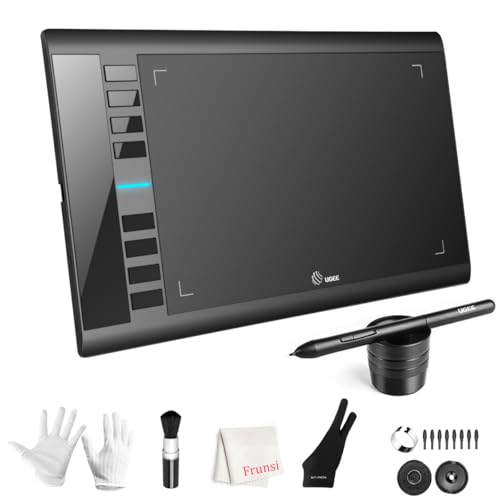
For digital manga hair, you need a graphics tablet and art software like Clip Studio Paint or Procreate. For traditional art, you need graphite pencils (2H for sketching, 2B for lines), a kneaded eraser, and smooth drawing paper. While professional tools can be helpful, many free software options like Krita or Medibang Paint are also excellent for beginners. The most important tool is your understanding of the technique.
For Digital Artists
- Graphics Tablet: A pressure-sensitive tablet is essential for varying line weight. Brands like Wacom and Huion offer great options for beginners.
- Art Software:
- Clip Studio Paint: Considered the industry standard for manga and anime illustration due to its excellent brush engine and comic creation features.
- Procreate (iPad): An incredibly intuitive and powerful app perfect for artists on the go.
- Photoshop: A versatile tool, though its brush engine can feel less natural for drawing than dedicated art programs.
- Budget-Friendly Options: Krita and Medibang Paint are robust, free programs that are more than capable of producing professional work.
For Traditional Artists
- Graphite Pencils: A small set is all you need. A hard pencil (like 2H) is great for initial light sketches, while a softer pencil (like 2B or 4B) is perfect for darker, more defined lines.
- Paper: Smooth paper, like Bristol board, is ideal for clean line art. A simple sketchbook is perfect for practice.
- Eraser: A kneaded eraser is excellent because it can be molded to a fine point for precise erasing and won’t damage the paper.
How Do You Draw Different Manga Hair Styles?
Drawing different manga hair styles is about adapting the core principles of blocking in shapes. Once you master the “clump” method, you can create any hairstyle imaginable. Spiky hair is built from triangles, long hair is built from flowing ribbons, and curly hair is built from connected coils. The foundation remains the same; only the shape of your primary masses changes. Let’s explore how to apply the core technique to some of the most popular and iconic styles.
How Do You Draw Spiky Anime Hair?
To draw spiky anime hair, you construct the hair from sharp, triangular clumps of varying sizes that defy gravity. This hairstyle is often used in shonen manga to convey energy, wildness, or a rebellious personality. The key is variation; do not make all the spikes uniform in size or direction.
- Establish the Hairline: Start with your head and hairline as always.
- Draw Primary Spikes: From the hairline, draw large, triangular clumps pointing in various directions. Think of these as the main structural spikes that define the silhouette.
- Add Secondary Spikes: Layer smaller spikes within and between the primary ones. This layering is what creates the illusion of thick, voluminous hair. Overlap them to show depth.
How Do You Draw Long, Flowing Anime Hair?
To draw long, flowing anime hair, use long, elegant S-curves to define the gesture and then build “ribbon-like” masses that follow those curves. Long hair is defined by gravity and movement. It should wrap around the form of the character’s body, which sells the illusion of volume and makes the drawing believable. Think of the hair as a wide, silk ribbon. Where would it bend and fold as it falls over the shoulders and down the back?
- Gesture First: Draw a light “S” shaped guideline to show the path the hair will take.
- Build the Ribbon: Draw the main hair mass following this guide, making it wider near the head and tapering slightly towards the end.
- Show Form: Make sure the hair “wraps around” the shoulders and back. Don’t let it just fall flat behind the character.
- Add Details: Break up the end of the ribbon into a few smaller, tapered strands to show texture.
How Do You Shade and Color Manga Hair?
To shade anime hair, first pick a light source. Then, add a base color. On a new layer, add hard-edged shadows (cel shading) on the areas blocked from light. On another new layer, add a sharp, bright highlight on the area most directly hit by the light. This simple process of separating light and shadow is what creates the iconic shiny anime look. The placement of your shadows and highlights is determined entirely by the location of your imaginary light source.
The two most common methods are Cel Shading (hard-edged) and Soft-Gradient Shading.
| Feature | Cel (Hard) Shading | Soft (Gradient) Shading |
|---|---|---|
| Best For | Action, Comedy, Classic Anime | Drama, Romance, Realistic Styles |
| Technique | Hard-edged brush, Lasso-fill | Airbrush, Blend Tool |
| Difficulty | Easier for beginners | Requires more blending skill |
| Look & Feel | Clean, Graphic, Bold | Smooth, Realistic, Atmospheric |
Pro Tip: In digital art software, use a “clipping mask” on your color and shadow layers. By clipping these layers to your base hair shape layer, you can color and shade freely without worrying about going outside the lines.
FAQs About how to draw a manga hair
Is drawing anime hair hard?
No, drawing anime hair is not inherently hard, but it requires learning to see hair as simplified shapes and masses rather than individual strands. The difficulty for beginners is often overcoming the instinct to draw every single strand. Once you master the technique of blocking in large clumps first, the process becomes much easier and faster. Practice is the key to making it feel intuitive.
How do I avoid “helmet hair”?
To avoid “helmet hair,” you must draw the hair with volume, starting it from a correctly placed hairline on the skull, not from the outline of the head. Think of the hair as having its own space that extends off the scalp. Overlapping the hair clumps and adding strands that fall in front of and behind the head and shoulders will create the necessary depth and prevent it from looking like a solid, flat helmet.
What are the best brushes for drawing anime hair digitally?
For drawing anime hair, a simple hard round brush with pressure sensitivity for size and opacity is often the best choice. You don’t need complex, textured brushes. A basic round brush allows for clean line art, and the same brush can be used for cel shading. For softer looks, a basic airbrush or a watercolor-style brush for blending can be effective.
How do you draw anime hair blowing in the wind?
To draw hair blowing in the wind, you treat the wind as a force that shapes the hair’s flow. Instead of drawing hair falling down with gravity, draw the main hair masses flowing in the direction of the wind, using more dramatic and dynamic “S” or “C” curves. Smaller, lighter strands should be shown flying further and more erratically than the heavier main clumps.
How do you draw hair from different angles (side, back)?
You draw hair from different angles by remembering it wraps around the 3D form of the head. For a side view, the hairline is a curve running from the forehead to in front of the ear, and you’ll see the mass of hair on the back of the head. For a back view, you won’t see the face; the hair will grow from a point on the back of the crown and flow downwards or outwards. Always start with the simple 3D shape of the head.
Why is anime hair so spiky and colorful?
Anime hair is spiky and colorful as a key part of stylized character design, used to quickly communicate a character’s personality and make them instantly recognizable. Spiky hair can suggest an energetic or rebellious nature, while unusual colors (like blue or pink) create a unique visual identity in a world where realism is not the primary goal. It’s a form of visual shorthand for the audience.
How do you draw anime hair for boys versus girls?
While there are no strict rules, typically male anime hairstyles are shorter, more angular, or spikier, often with fewer stray strands. Female hairstyles are frequently depicted as longer, softer, and more flowing, with more detailed bangs and accessories. However, the core technique of drawing in clumps and masses applies to both; the main difference is in the length, shape, and flow of those clumps.
How can I practice drawing manga hair?
The best way to practice is through repetition and observation. Start by filling a page with just basic hair clumps and S-curves to build muscle memory. Then, find characters from your favorite manga or anime and try to deconstruct their hairstyles back into the basic shapes. Redraw them, focusing on the flow and volume, not perfect detail.
How do you draw a hair bun or ponytail?
To draw a ponytail or bun, you must first establish the gathering point on the head where the hair tie would be. Draw all the main hair clumps flowing from the hairline towards this single point. Then, from that point, draw the hair flowing outwards in the shape of the ponytail or wrapped around to form the bun. Remember to show tension lines pulling towards the gathering point.
How do you draw hair covering one eye?
To draw hair covering one eye, simply draw the hair clump or bangs as you normally would, but allow that specific shape to fall over the area where the eye would be. Treat the hair as an opaque object in the foreground. You can lightly sketch the eye underneath as a guideline to ensure the hair is falling in a believable way, and then erase the part of the eye that is covered.
Key Takeaways: How to Draw a Manga Hair Summary
- Think in Shapes, Not Strands: The fundamental secret to drawing manga hair is to simplify it into large, voluminous clumps or masses first. Avoid drawing individual strands until the very final detailing stage.
- Anatomy is Your Foundation: Always start with a light sketch of the head and a correctly placed hairline. This prevents the dreaded “helmet hair” and ensures the hair looks like it’s growing naturally from the scalp.
- Flow and Gesture are Key: Use long, confident curves (like ‘S’ and ‘C’ shapes) to define the overall movement of the hair. This gives the hairstyle a dynamic and lively feel, whether it’s long and flowing or short and spiky.
- Vary Your Shapes and Lines: Great-looking manga hair has variety. Use a mix of large, medium, and small hair clumps. When inking or refining, use varied line weight to create depth and visual interest.
- Light Logic Creates Volume: Shading and highlighting are what make hair look 3D. Establish a clear light source, and then add shadows on the opposite side and a distinct, shiny highlight on the side facing the light.
- Mastering Styles is About Adapting Basics: Whether it’s spiky, curly, or straight, all anime hairstyles are built from the same principles. Spiky hair uses triangles, long hair uses ribbons, and curly hair uses coils—but all are forms of shape-based construction.
Final Thoughts on How to Draw a Manga Hair
Learning how to draw manga hair is an incredibly rewarding skill that adds immense personality to your characters. Remember that it’s not about talent; it’s about technique. The shift in perspective from drawing individual lines to constructing volumetric shapes is the most important lesson you can learn.
Every artist starts with the basics. Don’t be discouraged if your first few attempts aren’t perfect. The key is to practice the principles outlined in this guide consistently. Start with simple head shapes, block in your hair masses, and have fun experimenting with different styles. With patience and practice, you will be creating dynamic, expressive hair that brings your characters to life.
Last update on 2026-04-07 / Affiliate links / Images from Amazon Product Advertising API


