
Wondering exactly when the legendary Dragon Ball manga came out? You’re not alone; many fans search for this foundational piece of pop culture history. Getting a precise date helps place the entire franchise in its proper context.
The original Dragon Ball manga, written and illustrated by Akira Toriyama, first came out on November 20, 1984. Its debut chapter was published in the 51st issue of Shueisha’s Weekly Shōnen Jump magazine in Japan. This marked the official start of its iconic run.
Based on analysis of historical manga records and official publication data, this guide provides a complete timeline. You will discover the full serialization history, the different collected editions, and how the release in America differed from the original Japanese version.
Key Facts
- Definitive Start Date: The first chapter of the Dragon Ball manga was published in Japan on November 20, 1984, in Weekly Shōnen Jump.
- Complete Original Run: The manga ran continuously for 519 chapters, from 1984 until May 1995, under the single title “Dragon Ball.”
- Standard Collected Edition: The original Japanese release was compiled into 42 standard paperback volumes known as tankōbon.
- North American Release: Viz Media is the official English publisher in North America, where they began releasing the manga in 2002, splitting it into “Dragon Ball” and “Dragon Ball Z.”
- Canonical Continuation: The story officially continues with the Dragon Ball Super manga, which began serialization in June 2015.
When Did the Original Dragon Ball Manga Come Out?
The definitive, verified publication date for the first chapter of the original Dragon Ball manga is November 20, 1984. The series, created by the legendary author and artist Akira Toriyama, made its debut in the 51st issue of the popular Japanese magazine Weekly Shōnen Jump, published by Shueisha. This single issue marked the official beginning of what would become a global phenomenon.

This release date is the foundational point for the entire Dragon Ball franchise. The manga’s first chapter, titled “Bloomers and the Monkey King,” introduced Son Goku and Bulma to the world. From this starting point, the manga would continue its serialization for over a decade, laying the groundwork for multiple anime series, films, and video games that followed. Historical manga records confirm this date as the true origin of the Dragon Ball story.
Understanding this 1984 starting point is crucial because the manga served as the primary source material for the anime. The manga’s story was always ahead of the animated series, which began its own broadcast in 1986. The incredible success of this weekly publication paved the way for everything that came after, beginning an 11-year run that cemented its place in history.
How Was the Dragon Ball Manga Serialized From 1984 to 1995?
The Dragon Ball manga ran continuously in Japan’s Weekly Shōnen Jump from November 20, 1984, to May 25, 1995. Over this remarkable period, a total of 519 individual chapters were published on a near-weekly basis. This consistent serialization is a testament to the series’ enduring popularity and Akira Toriyama’s incredible work ethic.
The original serialization followed a straightforward timeline, with key statistics that fans and collectors often seek.
- Start of Serialization: November 20, 1984 (Weekly Shōnen Jump Issue #51)
- End of Serialization: May 25, 1995 (Weekly Shōnen Jump Issue #25)
- Total Duration: Approximately 10.5 years
- Total Chapters: 519
- Total Collected Volumes: 42 (in the original Tankōbon format)
A critical point that many newer fans find confusing is the naming convention. In Japan, the entire 519-chapter manga was published under the single title “Dragon Ball.” The split into “Dragon Ball” and “Dragon Ball Z” was a distinction created for the anime adaptation to mark a time skip and a tonal shift in the story. However, for the manga’s original run, the title never changed. The story flows seamlessly from Goku’s childhood adventures directly into the Saiyan, Frieza, and Majin Buu sagas without a name change.
What Are the Key Publication Formats of the Dragon Ball Manga?
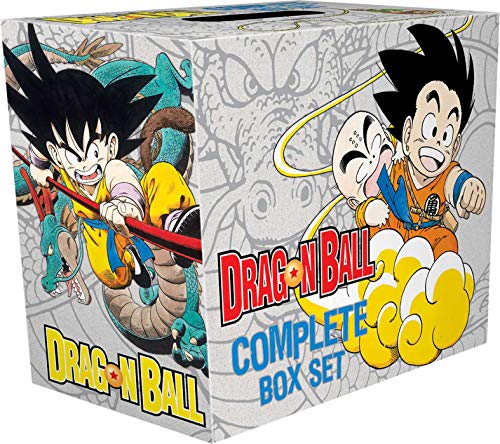
The Dragon Ball manga is primarily available in two key collected formats. The first is the original 42-volume tankōbon collection, which gathered the weekly chapters into standard paperback volumes. The second is the premium 34-volume kanzenban (Perfect Edition), a high-quality rerelease for collectors and enthusiasts. Understanding the difference between these is essential for anyone looking to read or collect the series.
What Is the Original 42-Volume Tankōbon Collection?
The Tankōbon format is the most common and widely recognized version of the Dragon Ball manga. These are the standard paperback volumes that collect the original 519 chapters. Shueisha began releasing these in Japan on September 10, 1985, and concluded with the 42nd volume on August 4, 1995. This 42-volume set is the foundation for most international releases, including the initial English versions from Viz Media. When you find Dragon Ball manga in a typical bookstore or library, you are most likely looking at this format or a release based on it.
What Is the 34-Volume Kanzenban (Perfect Edition) Rerelease?
The Kanzenban, or “Perfect Edition,” is a premium rerelease of the manga that was published in Japan between 2002 and 2004. This version was designed for collectors and is considered by many to be the definitive edition of the manga. It compresses the original 42 volumes into 34 larger-format volumes with several key upgrades.
- New Cover Art: Akira Toriyama drew brand-new cover illustrations for every one of the 34 volumes.
- Higher Quality Paper: The pages are printed on higher-grade, smoother paper for a better reading experience.
- Original Color Pages: Some chapters that originally had color pages in Weekly Shōnen Jump have them restored.
- Rewritten Ending: Toriyama famously made minor revisions to the dialogue and artwork of the final chapter, offering a slightly more refined conclusion to the series.
This edition is aimed at enthusiasts who want the highest-quality version of the original story.
| Feature | Tankōbon (Original) | Kanzenban (Perfect Edition) |
|---|---|---|
| Volume Count | 42 volumes | 34 volumes |
| Release Period | 1985 – 1995 | 2002 – 2004 |
| Cover Art | Original Weekly Shōnen Jump style | New artwork by Akira Toriyama |
| Page Quality | Standard manga newsprint | Higher-grade, smoother paper |
| Ending | Original 1995 ending | Slightly rewritten ending |
| Target Audience | General readers, original collectors | Premium collectors, enthusiasts |
When Did the Dragon Ball Manga Come Out in America?
Viz Media began releasing the Dragon Ball manga in America with the launch of the US Shonen Jump magazine in November 2002. This marked the first time the original manga was officially translated and distributed on a wide scale for the North American audience. The release strategy, however, was a source of confusion for many fans.
Unlike the single, continuous series in Japan, Viz Media made the decision to split the manga into two separate titles to align with the popular anime branding that American audiences were already familiar with.
* Dragon Ball: This title covered the first portion of the story, following Goku’s childhood adventures. It was collected into 16 volumes.
* Dragon Ball Z: This title picked up where the first part left off, beginning with the Saiyan Saga. This portion was collected into 26 volumes.
The first collected paperback volume of Dragon Ball was published in the US by Viz Media in 2003. This strategy, while commercially successful, cemented the misconception for many Western fans that Dragon Ball and Dragon Ball Z were originally two different manga series, when in fact they were one continuous story. Understanding this distinction is key to grasping the complete publication history of the series.
FAQs About when did dragon ball manga come out
When did the Dragon Ball Z manga come out?
The Dragon Ball Z manga technically does not exist as a separate series in Japan. The original Japanese manga was titled “Dragon Ball” for all 519 chapters. The “Z” branding was added by the anime adaptation and later adopted by Viz Media for the final 26 volumes of the English manga release to match the show’s popularity.
Is the Dragon Ball manga still going?
No, the original Dragon Ball manga created solely by Akira Toriyama concluded in May 1995. However, the franchise continues with the Dragon Ball Super manga, which is written by Toriyama and illustrated by an artist named Toyotaro. That series is ongoing as of 2026.
When did the Dragon Ball Super manga come out?
The Dragon Ball Super manga began its serialization in Shueisha’s V-Jump magazine on June 20, 2015. This was shortly before the premiere of the Dragon Ball Super anime series, and it serves as a canonical continuation of the original manga’s story.
How many chapters and volumes does the original Dragon Ball manga have?
The complete original Dragon Ball manga consists of 519 individual chapters. These chapters were collected into a total of 42 tankōbon (standard paperback) volumes in Japan. The story runs from Goku’s first meeting with Bulma through the final battle with Majin Buu.
Was there a Dragon Ball GT manga?
No, there was never a Dragon Ball GT manga written or illustrated by Akira Toriyama. Dragon Ball GT was an anime-only sequel produced by Toei Animation. While some related books and unofficial comics exist, it is not part of the original manga’s canon.
What’s the difference between the manga and the anime’s release dates?
The manga always came out before the anime. For example, the Dragon Ball manga started in 1984, while the first anime series premiered in 1986. This lead time allowed the manga to stay ahead of the anime’s story, though the anime often added “filler” content to avoid catching up to the manga’s weekly release.
Who is the publisher of the Dragon Ball manga?
The original Japanese publisher of the Dragon Ball manga is Shueisha. They published the series in their flagship magazine, Weekly Shōnen Jump. In North America, the official English-language publisher is Viz Media.
Is the entire Dragon Ball manga written by Akira Toriyama?
Yes, the entire original 519-chapter run of Dragon Ball was both written and illustrated by its creator, Akira Toriyama. For the modern Dragon Ball Super manga, Toriyama provides the story outlines and character designs, while the illustration is handled by his successor, Toyotaro.
How do I read the Dragon Ball manga in the correct order?
Simply read the 42 volumes of “Dragon Ball” in numerical order. If you are reading the English version from Viz Media, you would read all 16 volumes of “Dragon Ball” first, and then continue directly with the 26 volumes of “Dragon Ball Z” for the complete story.
Did the manga end the same way as the Dragon Ball Z anime?
The core ending is the same, but with minor differences. Both end after the defeat of Kid Buu and a ten-year time skip leading to the 28th World Martial Arts Tournament where Goku meets Uub. The manga’s ending is generally considered more concise, while the Kanzenban edition features a slightly redrawn and reworded final few pages.
Final Thoughts
Understanding the complete publication history of the Dragon Ball manga, from its start in 1984 to its various editions and international releases, provides a clear picture of its legendary status. You now have the definitive timeline and context to appreciate the foundation of the entire franchise.
- The Definitive Start Date – The original Dragon Ball manga by Akira Toriyama began on November 20, 1984, in Japan’s
Weekly Shōnen Jumpmagazine. - A Continuous 11-Year Run – The series ran for 519 chapters under the single title “Dragon Ball” until its conclusion in May 1995. The “Dragon Ball Z” name was an anime-only distinction in Japan.
- Two Main Collected Editions – The manga was collected in 42 standard
tankōbonvolumes and later in a 34-volume premiumkanzenban(Perfect Edition) which featured new art and a revised ending. - The US Release Was Different – Viz Media released the manga in America starting in 2002, splitting the series into “Dragon Ball” and “Dragon Ball Z” to match the anime branding.
- The Story Continues with Super – While the original manga is finished, the story is canonically continued by the Dragon Ball Super manga, which started in June 2015 with story concepts by Toriyama and art by Toyotaro.
With this knowledge, you can confidently navigate the world of Dragon Ball, knowing the true origin of Son Goku’s journey. Whether you are starting to read for the first time or are a longtime collector, appreciating the manga’s history is the first step to becoming a true expert on the series.
Last update on 2026-04-02 / Affiliate links / Images from Amazon Product Advertising API


