
Wondering what the Vagabond manga is about? You’re trying to understand if this epic samurai tale is worth diving into, especially given its legendary status and unfinished nature. You’ve come to the right place.
Vagabond manga is a critically acclaimed seinen epic by Takehiko Inoue that chronicles the fictionalized journey of the legendary swordsman Miyamoto Musashi. It masterfully explores his evolution from a violent youth into a revered master, focusing on profound themes like self-discovery, the nature of strength, and finding peace amidst chaos.
Based on extensive analysis of the manga and its critical reception, this guide explains the story, themes, and artistic brilliance that define Vagabond. You’ll discover exactly why this series is considered a masterpiece and whether its profound journey is the right one for you.
Key Facts
- Based on a Real Legend: The story is a fictionalized retelling of the life of Miyamoto Musashi, one of Japan’s most famous and skilled swordsmen, based on the 1935 novel Musashi by Eiji Yoshikawa.
- Created by a Renowned Author: Vagabond is written and illustrated by Takehiko Inoue, who is also the celebrated creator of the iconic basketball manga Slam Dunk and the wheelchair basketball series Real.
- Masterful Artwork: The manga is famous for its breathtaking art style, which utilizes traditional Japanese brush and ink techniques (sumi-e) to create hyper-realistic characters and stunningly fluid action sequences.
- Critically Acclaimed Masterpiece: Despite being unfinished, Vagabond is universally hailed as a masterpiece of the manga medium for its profound philosophical depth, complex character development, and unparalleled artistic quality.
- Indefinite Hiatus: The series has been on an indefinite hiatus since 2026, with author Takehiko Inoue citing the need to find the right approach to the story’s conclusion, leaving its final ending uncertain.
What Is Vagabond Manga About: Story, Themes, and Enduring Legacy Explained
Vagabond manga is a seinen epic by Takehiko Inoue that chronicles the fictionalized journey of legendary swordsman Miyamoto Musashi. It explores his evolution from a violent youth to a revered master, focusing on profound themes like self-discovery, the nature of strength, and finding peace amidst violence. The series is less a historical chronicle and more a philosophical exploration of one man’s quest to become “invincible under the sun,” a journey that forces him to confront the very nature of life, death, and his own identity.

Inspired by Eiji Yoshikawa’s classic novel Musashi, Takehiko Inoue uses the framework of a samurai epic to delve into questions that resonate far beyond the battlefield. From the visceral brutality of duels to the serene beauty of a quiet landscape, every panel is crafted to serve the story’s deeper purpose. It’s a narrative that deliberately slows down, focusing on moments of quiet introspection as much as it does on lightning-fast sword strikes.
Ultimately, Vagabond is about the arduous path of self-improvement. It argues that true mastery isn’t found in defeating others, but in conquering oneself. Through Musashi’s struggles, triumphs, and failures, the manga presents a timeless and compelling look at the human condition, making it a masterpiece that engages both the eyes and the soul.
Who Is Musashi Miyamoto in Vagabond, And What Is His Journey About?
In Vagabond, Musashi Miyamoto is depicted as a legendary Japanese swordsman who transforms from a bloodthirsty warrior, Shinmen Takezo, into a master seeking inner peace and the true essence of the sword. His journey is the heart of the manga, a grueling and often brutal path of self-discovery where intense physical battles serve as metaphors for his deep philosophical and internal struggles. He starts as a beast driven by instinct, but his journey is about becoming a true human being.
At the story’s outset, the protagonist is known as Shinmen Takezo, a young man from the village of Miyamoto who is feared for his wild strength and violent nature. He is more demon than man, obsessed with becoming the strongest fighter in Japan. This obsession leads him down a bloody path, challenging one master after another, leaving a trail of bodies in his wake.
However, Musashi’s journey is not a simple ascent to power. It is a cyclical process of fighting, reflecting, and evolving. He learns that true strength is not just about the ability to kill but also about the wisdom to preserve life, the courage to face one’s own flaws, and the tranquility to connect with the world. His quest transforms from a desire for fame and dominance into a profound search for enlightenment and harmony with his own soul.
How Does Musashi Evolve From Shinmen Takezo To Miyamoto Musashi?
Musashi Miyamoto evolves from Shinmen Takezo by abandoning his early, undisciplined bloodlust and embracing a quest for true enlightenment. Key events, such as his encounter with the monk Takuan Sōhō and the humbling realization of his own superficial strength, catalyze this profound transformation in identity and purpose. This isn’t just a name change; it’s a rebirth.
The initial transformation is forced upon him by Takuan, who captures the wild Takezo and sentences him to a form of solitary confinement. During this time, suspended from a tree and later locked in a room filled with books, Takezo is forced to confront his own inner emptiness and ignorance for the first time. It is Takuan who bestows upon him the new name “Miyamoto Musashi,” giving him a chance to leave his monstrous past behind and start a new life.
This evolution is marked by several key shifts:
* From Brute Force to Technique: He begins to understand the difference between raw power and true swordsmanship, learning to read opponents and utilize strategy.
* From Killing to Understanding: His duels slowly shift from acts of pure aggression to opportunities for learning, both about his opponents and himself.
* Confronting Fear: Musashi learns that his rage and aggression are rooted in a deep-seated fear, and his journey becomes about mastering that fear.
* Seeking Connection: The isolated warrior gradually learns the value of human connection, realizing that strength can also be found in protecting and learning from others.
What Role Does Kojiro Sasaki Play In Musashi’s Journey?
Kojiro Sasaki is depicted as Musashi Miyamoto’s fated rival in Vagabond, a prodigal swordsman whose natural genius and unique approach to combat serve as a constant benchmark and driving force for Musashi’s growth. Their intertwined destinies deeply influence the manga’s philosophical explorations of what it means to be strong. Kojiro is the light to Musashi’s shadow, the effortless talent to Musashi’s relentless effort.
Unlike Musashi, who carves his path through sheer will and brutal experience, Kojiro is portrayed as a natural. He is a deaf swordsman whose inability to hear has sharpened his other senses to a supernatural degree, allowing him to perceive the “sound” of a sword’s cut before it happens. His journey runs parallel to Musashi’s, but it is one of quiet, instinctual growth rather than loud, violent struggle.
Kojiro represents a different path to mastery. He is pure, unburdened by the existential angst that plagues Musashi. Their rivalry is not one of simple hatred but of profound, almost spiritual connection. Kojiro is the ultimate challenge that Musashi must overcome, not just physically, but philosophically. To defeat Kojiro would mean Musashi has finally integrated all aspects of himself and truly understood the way of the sword.
What Are The Core Philosophical Themes Explored In Vagabond Manga?
Vagabond manga delves into profound philosophical themes, primarily focusing on identity, the true meaning of strength, the pursuit of mastery, and the balance between violence and inner peace. These explorations are deeply rooted in Zen Buddhist concepts, shaping Musashi Miyamoto’s transformative journey from a killer into a seeker of enlightenment. The manga uses the sword as a tool to dissect the human soul.
The entire narrative is a vehicle for exploring these deep questions. Every duel, every conversation, and every quiet moment of reflection pushes Musashi—and the reader—to consider what it truly means to live. The story consistently challenges simple answers, presenting a world of gray morality and complex truths.
Some of the key themes include:
* The Search for Identity: The central question of “Who am I?” echoes throughout the series, embodied by Musashi’s transformation from Shinmen Takezo.
* The Duality of Violence and Peace: Vagabond constantly explores whether it’s possible to find inner peace through a violent path and what it means to take a life.
* Connection to Nature: Musashi often finds profound insights not in a dojo, but in the quiet observation of nature, learning about flow, strength, and life from rivers and trees.
* The Idea of the “Vagabond”: The title itself refers to the endless journey, suggesting that the path to mastery has no final destination.
What Does Vagabond Teach About The Nature Of Strength?
Vagabond teaches that true strength transcends mere violence and physical ability, evolving into a profound understanding of oneself and the world. Musashi Miyamoto’s quest transforms from seeking to kill into a journey for inner calm, self-control, and the harmony with all things. Initially, he believes strength is the power to dominate and destroy.
In his youth, Musashi’s definition of strength is simple: being able to defeat any opponent. His world is a ladder, and he intends to climb to the top over a mountain of corpses. However, he repeatedly encounters masters whose strength is not just physical. He meets an elderly spear master who is unbeatable not because of power, but because of his complete lack of killing intent. He learns from a farmer that the strength to cultivate life is as formidable as the strength to take it.
Through these encounters, Musashi’s understanding deepens. He learns that true strength is:
* Self-Control: The ability to sheathe your sword is harder than drawing it.
* Empathy: Understanding your opponent’s heart is key to victory.
* Humility: Recognizing your own weaknesses and the vastness of the world.
* Connection: Realizing you are not an isolated island but part of a larger whole.
How Does Zen Buddhism Influence Vagabond’s Narrative and Character Development?
Zen Buddhism profoundly influences Vagabond, shaping Musashi Miyamoto’s quest for enlightenment through concepts like ‘Mushin’ (no-mind), mindfulness, and detachment. This spiritual framework guides his transformation, linking his swordsmanship to a search for inner harmony and a deeper understanding of life and death. The monk Takuan Sōhō acts as a direct voice for these principles early in the story.
The core idea of Mushin, or “no-mind,” is central. It’s a state of fluid action where the mind is free from thoughts of anger, fear, or ego. Musashi slowly learns to achieve this state, where his sword moves without conscious thought, becoming a pure extension of his will and the environment around him. This is often depicted visually as him becoming one with nature.
Other Zen concepts are woven throughout the narrative:
* Mindfulness: Musashi learns to be fully present in the moment, whether he is carving a Buddha statue or facing a deadly opponent. This focus allows him to see things as they truly are.
* Impermanence: The characters are constantly grappling with the fleeting nature of life. This understanding pushes Musashi to find meaning beyond temporary victories.
* The Unity of Opposites: The manga explores how life and death, strength and weakness, violence and peace are not separate but two sides of the same coin.
How Does Takehiko Inoue’s Art Style Elevate Vagabond’s Narrative?
Takehiko Inoue’s art style in Vagabond elevates its narrative through unparalleled expressive brushwork, dynamic action, and hyper-realistic detail that conveys profound emotion and immersive environments. His masterly use of traditional Japanese ink painting techniques creates a visually stunning and unique storytelling experience. The art is not just supplementary; it is a core part of the manga’s storytelling.
Inoue’s approach is a departure from typical manga styles. He employs a realistic aesthetic, focusing on the intricate details of human anatomy, clothing, and the natural world. But it’s his use of the brush that truly sets Vagabond apart. The lines are not always clean and perfect; they are raw, energetic, and full of emotion. A few swift strokes can convey the ferocity of a sword slash, while delicate ink washes create the serene atmosphere of a misty forest.
The art excels in several key areas:
* Emotional Expression: The characters’ faces are incredibly detailed and expressive. A single panel of Musashi’s eyes can convey more than a page of dialogue about his internal state.
* Dynamic Action: Fight scenes are a chaotic yet beautiful dance of ink. Inoue masterfully captures the speed, weight, and lethality of combat.
* Environmental Storytelling: Landscapes are not just backdrops; they are characters in themselves. The beauty and indifference of nature often provide a stark contrast to the human drama unfolding within it.
What Makes Inoue’s Brushwork So Unique In Vagabond?
Inoue’s brushwork in Vagabond stands out due to its masterful combination of traditional Japanese calligraphy and sumi-e ink painting techniques. This creates incredibly expressive characters, fluid action, and rich, textured environments through varying line weights and bold ink washes, making the art deeply immersive. It feels less like a drawing and more like a painting in motion.
Unlike the uniform lines often created with technical pens, Inoue’s brush allows for incredible variation. This allows him to:
* Convey Texture: The rough texture of a hemp robe, the smooth grain of a wooden sword, and the sharp glint of steel are all rendered with startling realism through his control of ink.
* Show Movement and Energy: Wild, almost chaotic brushstrokes are used during intense battles to convey speed and impact, making the action feel alive and unpredictable.
* Create Atmosphere: Soft, wet ink washes are used to create fog, rain, or the gentle light of dawn, completely changing the mood of a scene.
* Express Raw Emotion: Inoue often uses rough, unrefined lines when depicting characters in states of extreme emotion, visually representing their inner turmoil.
This calligraphic approach connects the artwork itself to the manga’s themes. The discipline, flow, and focus required for both swordsmanship and brush painting become intertwined, making the very act of drawing a part of the philosophical exploration.
Why Is Vagabond Considered A Masterpiece (Despite Being Unfinished)?
Vagabond is considered a masterpiece due to its profound philosophical depth, unparalleled artistic brilliance, and complex character development, creating an immersive and thought-provoking experience. Despite its unfinished status, the existing narrative offers immense value and has cemented its legacy as a seminal work in the seinen genre. The journey, for many readers, is more important than the destination.
The manga’s reputation rests on the sheer quality of what has been published. Each arc, each duel, and each moment of introspection is crafted with such care and artistry that it stands on its own as a powerful piece of storytelling. While the lack of a definitive ending is a point of frustration for many, the quality of the journey is so high that it overshadows the missing conclusion.
Its masterpiece status is justified because:
* It Redefined Artistic Standards: Inoue’s art pushed the boundaries of what was thought possible in a weekly or monthly manga publication.
* It Offers Profound Thematic Depth: It tackles complex philosophical questions with a nuance rarely seen in any medium, let alone comics.
* The Character Arc is Transformative: Musashi’s journey from a violent brute to a thoughtful seeker is one of the most compelling and well-realized character arcs in modern fiction.
* The Journey Itself is the Reward: Many argue the story’s themes of an endless journey for self-improvement are ironically reinforced by its unfinished nature. The existing chapters provide a thematically complete experience of growth, even if the plot is not fully resolved.
What Is The Current Status Of Vagabond Manga And Will It Ever Be Finished?
Vagabond manga has been on an indefinite hiatus since May 2015, and its completion remains uncertain. Author Takehiko Inoue has cited health concerns and the immense creative pressure of concluding such a monumental story as reasons for the pause. While he has expressed a desire to return to it, there have been no concrete announcements about its resumption.
In various interviews over the years, Inoue has spoken about the mental and physical toll of drawing Vagabond. He felt that his creative energy was drained and that he needed to step away to recharge and find the right state of mind to properly conclude Musashi’s journey. During this hiatus, he has focused on his other ongoing manga, Real, and other projects like serving as the writer and director for the film The First Slam Dunk.
While fans remain hopeful, it is best to approach Vagabond with the understanding that the story may never receive its intended ending. The beauty of what exists is undeniable, but the promise of a final duel between Musashi and Kojiro remains, for now, an unfulfilled one.
How Does Vagabond Compare To Other Seinen Manga Like Berserk Or Vinland Saga?
Vagabond, Berserk, and Vinland Saga are all acclaimed seinen manga known for their mature themes and epic character journeys. However, Vagabond uniquely prioritizes philosophical introspection and the internal quest for mastery over the high fantasy elements of Berserk or the explicit historical realism of Vinland Saga, all while featuring a distinct, brushwork-heavy art style. They are often called the “seinen big three,” but they explore their themes in very different ways.
While all three feature protagonists on arduous journeys shaped by violence, their core focus differs significantly. Berserk is a dark fantasy epic about the struggle against a cruel, deterministic fate. Vinland Saga is a historical drama that evolves into a deep exploration of pacifism and building a peaceful society. Vagabond is a contemplative, philosophical journey inward, using historical fiction as a backdrop for a story about self-mastery.
Here is a direct comparison:
| Feature/Aspect | Vagabond | Berserk | Vinland Saga |
|---|---|---|---|
| Primary Theme | Self-discovery, mastery, philosophy, peace | Trauma, fate, vengeance, humanity | Pacifism, revenge, creating a utopia |
| Protagonist’s Journey | Internal, philosophical, spiritual evolution | Cycle of suffering, fight against destiny | From vengeance to non-violence |
| Art Style | Expressive brushwork, realism, sumi-e influence | Gritty, hyper-detailed, dark fantasy | Clean, realistic, dynamic action |
| Genre Elements | Historical fiction, philosophical, martial arts | Dark fantasy, horror, psychological | Historical fiction, action, drama |
| Status | Indefinite hiatus | Ongoing (posthumously) | Ongoing (final arc) |
Should You Read Vagabond Manga In 2026?
Yes, you should absolutely read Vagabond manga in 2026, even though it’s currently unfinished. Its exceptional art, deep philosophical exploration of Musashi Miyamoto’s journey, and compelling themes offer a uniquely profound and transformative reading experience that is widely considered a masterpiece. The journey presented is so rich that it feels complete in its own right.
For those hesitant about the incomplete story, it’s important to reframe the experience. Vagabond is less about the race to a finish line and more about the quality of the path taken. The 37 published volumes contain a fully realized and deeply moving character arc that explores the core themes to a satisfying degree. Reading Vagabond is like visiting a magnificent, partially-built cathedral—the lack of a spire doesn’t diminish the beauty of the soaring arches and stained-glass windows that are already there.
You should read Vagabond if:
* You appreciate breathtaking, masterful artwork.
* You enjoy deep, character-driven stories over plot-heavy action.
* You are interested in philosophy, Zen Buddhism, and questions of self-improvement.
* You are patient and willing to savor a slow-burn, contemplative narrative.
FAQs About What Is Vagabond Manga About
Is Vagabond manga historically accurate?
No, Vagabond is best described as historical fiction that is loosely based on historical figures and events. While its protagonist, Miyamoto Musashi, and his rival, Kojiro Sasaki, were real people, Takehiko Inoue takes significant artistic liberties. The manga focuses on the philosophical and emotional journey of its characters rather than adhering strictly to historical records, blending fact and legend to serve its deeper thematic goals.
How many volumes of Vagabond manga are there?
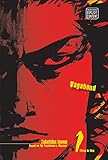
As of its current hiatus, there are 37 collected tankōbon volumes of Vagabond. For English-speaking audiences, Viz Media has published the series in a larger “Vizbig” format, which compiles three of the original volumes into one book. There are currently 12 Vizbig editions available, covering the entire published run of the series to date.
What age rating is Vagabond manga?
Vagabond is rated M for Mature (18+), and this rating should be taken seriously. The series contains graphic and realistic depictions of violence, including dismemberment and brutal death. It also explores complex and dark psychological themes, contains some nudity, and deals with mature subject matter that would be inappropriate for younger readers.
Is Vagabond manga suitable for beginners to manga?
Vagabond can be a challenging entry point for complete manga beginners. Its slow, contemplative pacing, deep philosophical themes, and intense, realistic violence might be overwhelming for someone expecting a more conventional action story. However, for a mature reader who appreciates stunning art and a deep character study, it could be a mind-blowing introduction to the potential of the manga medium.
Where does Vagabond manga’s story roughly end?
The manga’s story pauses after a significant arc where Musashi spends time in a farming village, learning to cultivate land and protect the villagers from bandits. This arc represents a major turning point in his development, where he learns about the strength of community and the value of creating rather than destroying. While the fated duel with Kojiro is set up, the narrative stops before it occurs.
What other manga has Takehiko Inoue created?
Takehiko Inoue is a legendary manga artist with several masterpieces to his name. Before Vagabond, he achieved massive international fame with Slam Dunk, a high school basketball manga that is one of the best-selling manga of all time. He is also the creator of Real, a critically acclaimed ongoing series about wheelchair basketball that explores themes of disability and rehabilitation with profound empathy.
How long does it take to read Vagabond?
The time it takes to read Vagabond varies greatly, but a rough estimate is between 30 and 50 hours. With 37 volumes, it is a substantial commitment. However, many readers find themselves spending extra time simply staring at the artwork. The visual density and philosophical weight often encourage a slower, more deliberate reading pace to fully absorb the experience.
Does Vagabond have an anime adaptation?
No, Vagabond has never been adapted into an anime series or movie. This is a frequent point of discussion among fans, with many believing that no animation studio could truly capture the unique beauty and texture of Inoue’s brushwork. For now, the manga remains the one and only way to experience this story.
Are there any official Vagabond art books?
Yes, Takehiko Inoue has released official art books that collect the stunning color and black-and-white illustrations from Vagabond. The most famous are Water and Sumi. These books offer fans a chance to appreciate the artwork in a larger format, providing a deeper look into the intricate details of Inoue’s character designs, landscapes, and expressive brush techniques.
Why did Takehiko Inoue start drawing Vagabond?
Takehiko Inoue was deeply inspired after reading Eiji Yoshikawa’s novel Musashi and felt a strong desire to explore the character of Miyamoto Musashi through his own artistic lens. He was interested in questioning the nature of a “strong” person and wanted to deconstruct the legend to find the human being underneath. Vagabond became his medium for exploring these complex questions about life, strength, and self-discovery.
Final Thoughts on Vagabond Manga
In sum, Vagabond transcends the typical samurai story, offering a meticulously crafted narrative and breathtaking art that invite readers on a deeply personal and philosophical journey. Takehiko Inoue masterfully guides Musashi Miyamoto from a path of brutal violence to a quest for true self-mastery, exploring universal themes of identity, strength, and the search for meaning in an ever-changing world. Despite its unfinished status, the existing volumes provide a complete and profound experience, cementing its place as an undisputed masterpiece in the manga landscape. For those seeking a visually stunning and intellectually stimulating epic, Vagabond remains an essential read, an enduring testament to the power of sequential art to explore the depths of the human spirit.
Last update on 2026-03-22 / Affiliate links / Images from Amazon Product Advertising API


