
Wondering what color Ulquiorra’s sword is in the Bleach
In Tite Kubo’s official color artwork for the Bleach
Based on an analysis of Tite Kubo’s original artwork and official databooks, this guide provides the definitive, canon answer. We’ll break down the specific evidence from the
Key Facts
- Manga Canon Color: In Tite Kubo’s official color art, Ulquiorra’s sword blade is metallic silver or off-white, while the handle and sheath are dark green.
- Source of Confusion: The primary confusion stems from the anime adaptation, which often portrays the blade with a dark metallic green or teal sheen for artistic effect.
- Sword Name Meaning: The sword’s name, “Murciélago,” is Spanish for “Bat,” which directly ties into Ulquiorra’s bat-like Resurrección form.
- Transformation Mechanics: During his Resurrección, the physical sword dematerializes, as its power is absorbed into Ulquiorra’s body to fuel his transformation.
- Segunda Etapa Weapon: In his unique second release, Segunda Etapa, Ulquiorra no longer wields a sword but instead creates lances of pure green energy called Lanza del Relámpago.
What Color Is Ulquiorra’s Sword in the Manga Canon?
The definitive, canonical color of Ulquiorra Cifer’s sword blade in the Bleach

This official depiction is the primary source material and serves as the foundation for the character’s design. The main reason for any confusion is the difference between the
Understanding the
Why Is There So Much Confusion About Murciélago’s Color?
The confusion over the color of Ulquiorra’s sword, Murciélago, arises from the key differences between the original
Here is a direct comparison of the two official sources:
| Feature / Aspect | Manga Canon (Based on Tite Kubo’s Art) | Anime Adaptation (Studio Pierrot) |
|---|---|---|
| Blade Color | Metallic Silver / Off-White | Often depicted with a Dark Metallic Green or Teal Sheen |
| Hilt Wrap & Sheath | Dark Green | Dark Green / Black |
| Sword Guard (Tsuba) | Brass/Gold color | Brass/Gold color |
| Reiatsu / Cero Color | Green / Emerald Green | Green / Teal |
The most significant difference lies in the blade itself. While Kubo’s art shows a traditional silver katana blade, the anime frequently added a green or teal tint to the blade’s metallic sheen. This artistic choice was likely made to visually connect the sword to Ulquiorra’s green eyes, tear marks, and powerful green Cero, creating a more unified color palette for animation. Because the anime was the first time many fans saw Ulquiorra in full, moving color, that green-tinted blade became a memorable part of his image, leading to the long-standing debate.
What Is the Evidence for the Sword’s Color in the Manga ?
The most direct evidence for the sword’s canon color comes from official artwork created by Tite Kubo himself. When analyzing canonicity, the creator’s own published materials are the highest authority, taking precedence over adaptations.
Here are the primary sources confirming the silver blade and green hilt:
- Bleach
Manga Volume 40 Cover: This is the most definitive proof. The cover art clearly depicts Ulquiorra holding his Zanpakutō, Murciélago. On this cover, the blade has a distinct metallic, silver-white sheen, and the handle wrap (tsuka-ito) and sheath are a deep, unambiguous green. - Official Colorized
Manga Pages: In officially sanctioned digital color versions of themanga , which are supervised or based on Kubo’s original notes, Murciélago is consistently colored with a silver blade and green accents. - Bleach Official Character Book 3: UNMASKED: This databook contains detailed character profiles and design notes. The information within aligns with the color schemes presented in Kubo’s personal artwork, reinforcing the silver and green design as the established canon.
How Does Ulquiorra’s Sword, Murciélago, Appear in its Sealed Form?
In its sealed state, Murciélago is a standard-sized katana with a few highly distinctive features that make it unique to Ulquiorra. While the blade is a simple, slender katana, the guard and handle design set it apart from other Zanpakutō.
Here is a breakdown of its physical appearance:
- Blade: A standard length, straight-edged katana blade. As established, its canonical color is metallic silver.
- Guard (Tsuba): This is the sword’s most recognizable feature. Instead of a typical flat guard, it’s a continuous, three-dimensional piece of brass-colored metal that frames the hilt. It has two curved extensions on the sides, making it vaguely resemble a stylized eye or a bat-like figure.
- Hilt (Tsuka): The handle is wrapped in traditional Japanese style with a dark green fabric or leather wrap, known as tsuka-ito.
- Sheath (Saya): The sword’s scabbard is simple and lacquered with the same dark green color as the hilt, creating a cohesive look when the sword is sheathed at Ulquiorra’s waist.
What Changes Occur During Ulquiorra’s Resurrección Releases?
During his Resurrección, Ulquiorra’s physical sword, Murciélago, completely dissolves and is absorbed into his body. An Arrancar’s Zanpakutō is the sealed form of their original Hollow powers. The act of “release” is not just unsheathing a weapon but unleashing that stored power, causing a physical transformation. Ulquiorra is unique among the Espada as he is the only one known to have a second stage of release.
What Is the First Release: Murciélago?
Upon speaking the release command, “Enclose, Murciélago” (鎖せ, tozase), Ulquiorra’s katana dissolves into a shower of green and black spiritual energy. This energy fuels his transformation. He gains large black, bat-like wings, his Hollow mask remnants form a horned helmet, and his attire changes. In this state, he no longer wields a physical sword, instead relying on his immense speed, strength, and powerful Cero blasts in combat.
What Is the Second Release: Segunda Etapa?
Ulquiorra’s second release, Resurrección: Segunda Etapa (Second Stage Resurrection), is a power unique to him among all Arrancar. In this ultimate form, he becomes a more demonic, slender figure with a long tail and even more prominent bat-like features. The concept of a sword is completely gone, replaced by a far more devastating weapon.
He can generate a new primary weapon called Lanza del Relámpago (Spanish for “Lance of the Lightning”). This weapon has several key properties:
- Appearance: A long, glowing lance made of concentrated green or cyan spiritual energy.
- Creation: He can materialize it in his hand at will and create multiple lances if the first is destroyed or lost.
- Use: He wields it as both a close-quarters spear and a thrown javelin.
- Effect: When thrown, it creates a massive, devastatingly powerful explosion upon impact, far exceeding the power of his Cero Oscuras.
Can You Buy a Replica of Ulquiorra’s Sword?
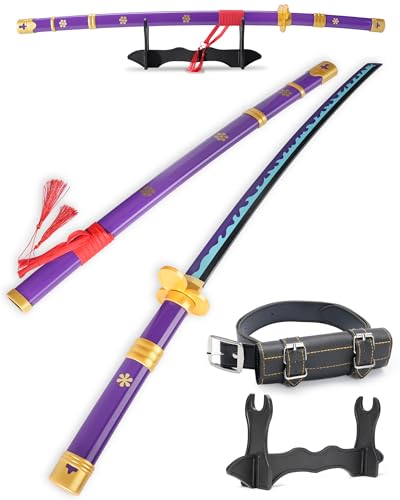
Yes, numerous replicas of Ulquiorra’s sword, Murciélago, are widely available for purchase, primarily for cosplay and collectors. When searching for a replica, the key is to find one that accurately reflects the details discussed in this guide if you want a
Look for replicas with a silver-colored blade and a dark green hilt and sheath. Many replicas exist, but some incorrectly adopt the anime’s green-tinted blade. For true accuracy, also pay attention to the unique shape of the guard (tsuba). Most replicas are made of stainless steel for display purposes, which is perfect for wall mounting or cosplay events. For practitioners, some vendors may offer functional versions made from carbon steel.
FAQs About what color is ulquiorras sword in the manga
What does Murciélago mean?
The name “Murciélago” is Spanish for “Bat.” This name is highly symbolic, reflecting Ulquiorra’s first Resurrección form, which gives him large, black bat-like wings and a horned helmet reminiscent of a bat’s head. The bat theme represents the darkness and the nature of his existence in Hueco Mundo.
Why is Ulquiorra’s Cero green?
Ulquiorra’s Cero is green to signify its uniqueness and power, and to match his overall color scheme. While most regular Ceros are red, powerful Arrancar often have signature colors for their attacks. Ulquiorra’s green Cero, particularly the devastating Cero Oscuras (“Black Cero”), visually connects to his green eyes and reiatsu, marking it as his distinct ability.
What is the release command for Murciélago?
The official release command for Murciélago is “Enclose” (鎖せ, tozase). When Ulquiorra speaks this command, his Zanpakutō dissolves into spiritual power, initiating his transformation into his first Resurrección state. This command contrasts with the more common “release” type commands of Shinigami, reflecting the different nature of Arrancar Zanpakutō.
Is Ulquiorra a Vasto Lorde?
It is heavily implied but never explicitly confirmed in the
What do the tear marks on Ulquiorra’s face mean?
The green tear-like marks under Ulquiorra’s eyes symbolize his concept of “Emptiness” or “Nihilism.” He claims not to understand human emotions or the “heart.” The tear marks are a visual irony: he looks as if he is perpetually crying, yet he cannot comprehend the emotions that cause tears, representing his internal void.
Why is Ulquiorra the 4th Espada?
Ulquiorra is the 4th Espada because Aizen ranked them by spiritual power, but he forbade Ulquiorra from revealing his Segunda Etapa. In his first release, his power level is that of the 4th Espada. However, it’s widely believed by fans that if his second release were factored in, his true power would rank him even higher.
What is Cero Oscuras?
Cero Oscuras, meaning “Black Cero” in Spanish, is a vastly more powerful version of a Cero that can only be used by Espada in their released state. Ulquiorra’s Cero Oscuras is black with a green outline and is powerful enough to shatter Ichigo’s Bankai mask with a single blast, showcasing a significant jump in destructive force from a normal Cero.
What is the shape of Ulquiorra’s Hollow hole?
Ulquiorra’s Hollow hole is located on his neck, at the base of his throat, near his clavicle. In the
Does Ulquiorra’s sword appear in the Thousand-Year Blood War (TYBW) anime?
No, Ulquiorra’s sword does not appear in the Thousand-Year Blood War arc. Ulquiorra was defeated and died during the Arrancar arc, long before the events of the TYBW. Therefore, neither he nor his Zanpakutō, Murciélago, play any role in the final arc of the series.
What is Ulquiorra’s aspect of death?
Ulquiorra’s aspect of death as an Espada is “Emptiness” or “Nihilism.” Each of the ten Espada represents an aspect of death that led to their creation as Hollows. Ulquiorra’s is born from a feeling of existential loneliness and the inability to connect with others, leading to his belief that anything he cannot see does not exist.
Key Takeaways: Ulquiorra’s Sword Color & Lore
- Manga Canon Color is Silver: Based on official color art from Tite Kubo, such as the cover of Volume 40, Murciélago’s blade is metallic silver, while its hilt and sheath are dark green.
- Anime Created the Confusion: The anime adaptation by Studio Pierrot often depicted the blade with a dark metallic green or teal sheen, which is the primary source of the color debate among fans.
- The Sword Disappears in Resurrección: During both his first and second releases, Ulquiorra’s physical sword dissolves. Its power is integrated into his body to fuel his transformation.
- Segunda Etapa Uses an Energy Weapon: In his final form, Ulquiorra does not use a sword but instead creates
Lanza del Relámpago, a powerful spear of pure green spiritual energy. - The Bat Theme is Key: Murciélago means “Bat” in Spanish, which thematically links the sword to Ulquiorra’s bat-like appearance and attacks in his released states.
- Green is His Signature Color: While the blade is silver, Ulquiorra’s personal energy (
reiatsu), eyes, tear marks, and powerful Cero attacks are all a distinct shade of green or cyan, defining his character’s color palette.
Final Thoughts on Ulquiorra’s Sword
Ultimately, the debate over Ulquiorra’s sword color is a classic case of
Understanding this distinction doesn’t diminish the anime’s artistic contribution. Instead, it enriches a fan’s appreciation for the Bleach universe by highlighting the different creative choices made across mediums. For purists, cosplayers, and artists seeking the most authentic representation, the
Last update on 2026-04-23 / Affiliate links / Images from Amazon Product Advertising API


